7 Day Nepal Trip
Nepal, a landlocked Himalayan nation of unparalleled beauty, represents the ultimate travel frontier for seekers of adventure, culture, and ancient history. Tucked between the high Tibetan plateau to the north and the fertile plains of India to the south, this country serves as a magnificent bridge where Hinduism and Buddhism have coexisted and harmoniously intertwined for thousands of years. While many globally recognize Nepal solely as the home of Mount Everest and eight of the world’s fourteen highest peaks, there is a parallel universe of subtropical jungles, medieval royal kingdoms, and peaceful lakeside valleys waiting to be explored at lower elevations—making it a perfect year-round destination even for those without trekking boots.
For travelers operating on a limited timeframe, a seven-day Nepal trip window presents the perfect planning challenge. How do you experience the snow-capped majesty of the Himalayas, the spiritual energy of ancient temple squares, and the thrill of tracking wild rhinos in a single week?
This guide outlines a meticulously designed, highly optimized, and seamlessly organized 7-day Golden Triangle & Nagarkot Itinerary. Leveraging local transport realities and transit times, this step-by-step master guide ensures you experience the absolute soul of Nepal without feeling rushed, exhausted, or stranded in the country’s complex logistical network.
Nepal 7-Day Tour: Overview & Core Philosophy
To make the most of a one-week trip to Nepal, travelers must follow a geographic loop known as the “Golden Triangle”—connecting the capital city of Kathmandu, the tranquil lakeside mountain town of Pokhara, and the subtropical wildlife jungles of Chitwan National Park. By appending the serene eastern hill station of Nagarkot, this itinerary introduces a breathtaking mountain panorama without requiring a physically demanding, multi-day alpine trek.
The Strategic Geometry of the Golden Triangle
- Kathmandu (The Cultural Crucible): Perched in a bowl-shaped valley at an altitude of approximately 1,400 meters, Nepal’s capital serves as your point of arrival and departure. This is a living museum of history, defined by medieval Newari brick architecture, dense market alleys, and a cluster of ancient monuments recognized by UNESCO.
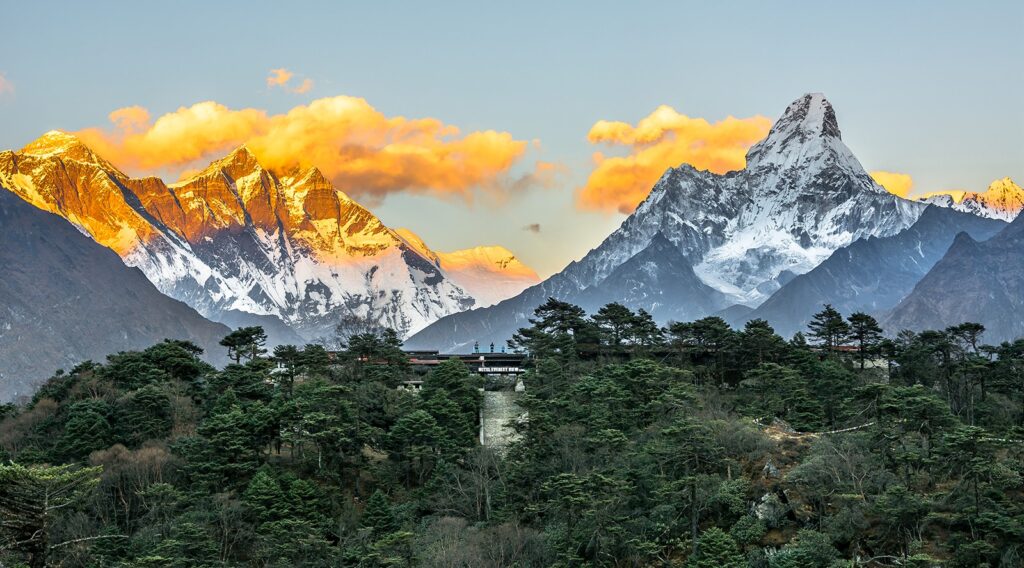
- Nagarkot (The Himalayan Balcony): Situated on a ridge 30 kilometers east of Kathmandu at an elevation of 2,175 meters, Nagarkot offers a commanding overlook of the central Nepalese Himalayas. On a clear day, the horizon unfolds in a sweeping display of peaks extending from the Annapurna range in the west all the way to Mount Everest in the east.
- Pokhara (The Lakeside Sanctuary): Resting at a comfortable 827 meters above sea level, Pokhara is the tourism and adventure capital of Nepal. Flanked by the massive, snow-covered Annapurna Range, Pokhara is where you slow down to enjoy mirror-like lakes, early-morning mountain sunrises, and adrenaline-pumping aerial sports.
- Chitwan (The Untamed Terai): In total contrast to the high-altitude mountains, Chitwan occupies the subtropical lowlands of the Terai region. Covered in dense sal forests, tall elephant grass, and meandering river systems, this UNESCO World Heritage reserve is one of Asia’s premier wildlife sanctuaries, providing protection to some of the planet’s most endangered animal species.
Highlights of the 7 Days Nepal Trips
By embarking on this customized seven-day route, you will experience a diverse portfolio of travel bucket-list accomplishments:
- Marvel at seven legendary UNESCO World Heritage Sites within the Kathmandu Valley, discovering the architectural genius of the ancient Licchavi and Malla dynasties.
- Witness a golden Himalayan sunrise over the Annapurna and Dhaulagiri ranges from the ridge lines of Sarangkot and Nagarkot.
- Embark on a deep 4WD Jeep Safari through Chitwan National Park, tracking the rare Greater One-Horned Rhinoceros, wild elephants, sloth bears, and the elusive Royal Bengal Tiger.
- Glide across the peaceful waters of Phewa Lake in a traditional wooden paddleboat, visiting the island sanctuary of Tal Barahi Temple.
- Explore underground sacred caverns and dramatic waterfalls like the roaring Davis Falls and the subterranean shrine of Gupteshwor Mahadev Cave in Pokhara.
- Engage in deep cultural immersion with the indigenous Tharu community of Chitwan through traditional village walks and energetic cultural stick dances.
- Walk with monks and pilgrims doing evening “kora” rituals around the massive, glowing white dome of Boudhanath Stupa.
- Enjoy complete, stress-free transit flexibility in a private, air-conditioned vehicle handled by a professional, highly skilled highway driver.
What to Expect: Realities of Travel in Nepal
While Nepal is an incredibly rewarding and welcoming country, travelers must maintain realistic expectations regarding local infrastructure, transit dynamics, and cultural norms.
Road Conditions & Transit Realities
In Nepal, physical distance on a map rarely correlates with actual travel time. While the route between Kathmandu and Pokhara is only 200 kilometers, the overland drive via the Prithvi Highway typically takes between 6 to 8 hours due to winding mountain geography, ongoing road widening projects, and heavy freight traffic. Overland transfers should be treated as active parts of the sightseeing day, filled with scenic river canyon views, roadside tea stops, and local village snapshots. To maximize comfort and safety on these winding roads, hiring a private vehicle with an experienced local driver is highly recommended over crowded local buses.
Physical Accessibility
This tour is designed to be highly accessible and comfortable for travelers of all ages, including families, couples, and seniors. Because there are no high-altitude mountain passes to cross on foot, there is no risk of Acute Mountain Sickness (AMS) or extreme physical exhaustion. However, you should expect to climb several flights of stairs—most notably the 365 stone steps leading to the hilltop stupa of Swayambhunath. Comfortable, closed-toe walking shoes with solid grip are essential for navigating uneven medieval cobblestones and dusty temple grounds.
Money, Denominations, & Local Costs
Nepal operates on the Nepalese Rupee (NPR). While credit cards are widely accepted in high-end hotels, boutique shops, and established restaurants in Kathmandu and Pokhara, cash remains essential for local markets, street food, temple entry tickets, and small rural purchases. ATMs are abundant in Thamel and Pokhara Lakeside but rare in Chitwan or Nagarkot. Furthermore, visitors from India must note that Indian currency notes of denominations higher than 100 Rupees (such as 200, 500, or 2,000 rupee notes) are strictly banned and not accepted in Nepal; you should carry a sufficient supply of 100-rupee notes. Additionally, most sit-down tourist restaurants levy a 10% service charge on top of your final bill.
The Master 7-Day Nepal Itinerary
This step-by-step itinerary is engineered to optimize every single hour of your journey. By utilizing structured transfers and selecting strategically located hotels, it ensures a smooth, highly rewarding travel flow.
Day 1: Arrival in Kathmandu & Scenic Drive to Nagarkot
Morning/Afternoon: Welcome to the Valley of the Gods
Your Himalayan journey begins the moment your flight descends into Tribhuvan International Airport (TIA) in Kathmandu. As you exit the aircraft and breathe the crisp mountain air, make your way directly to the immigration hall. If you do not hold a pre-arranged visa, proceed to the electronic kiosks to fill out your Visa on Arrival form, submit your payment (USD 50 cash for a standard 30-day visa is highly recommended for speed), and clear the immigration counter—a process that typically takes between 20 to 45 minutes depending on international flight arrivals.
Once you collect your baggage and pass through the final security screening, step out of the terminal into the arrival courtyard. Note: Due to heightened security protocols, travelers must go through up to three separate security screening points at TIA; keeping your checked baggage securely locked is highly advised.
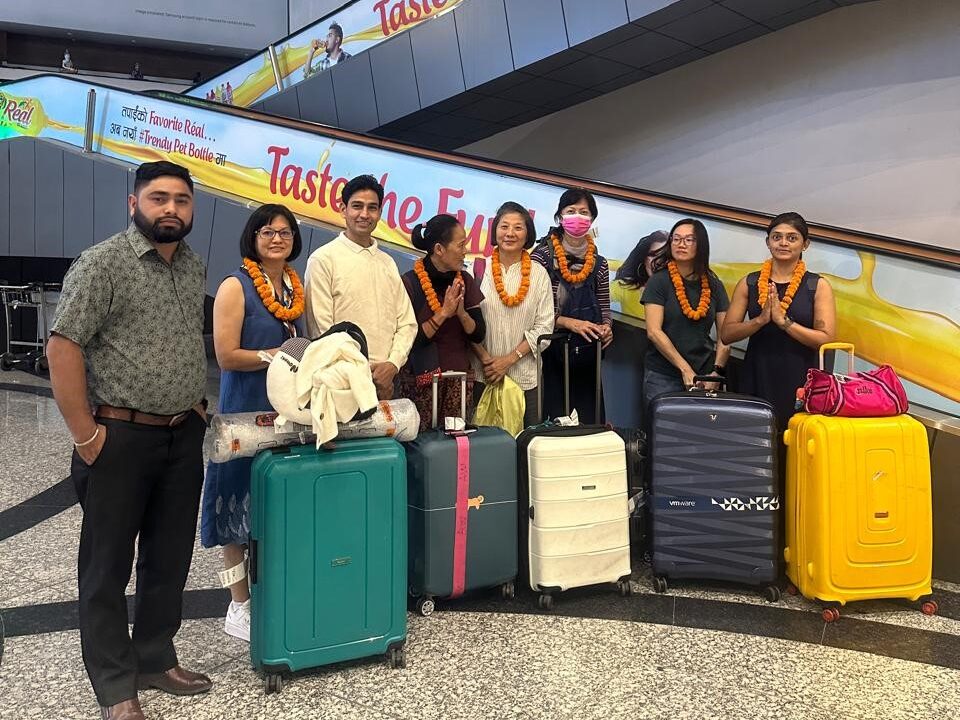
Here, you will be warmly met by your dedicated representative from Transport Hire Nepal holding a personalized placard. Board your clean, private, air-conditioned vehicle, settle into your comfortable seat, and immediately leave the busy city streets behind as you begin your 30-kilometer drive eastward toward the peaceful ridge-line of Nagarkot.
Afternoon: Climbing to the Himalayan Balcony
The drive to Nagarkot climbs steadily from the Kathmandu Valley floor, winding through lush terraced hillsides, pine forests, and small rural farming hamlets. As you rise to an elevation of 2,175 meters, the temperature cools, and the air becomes clean and fresh. Check into your scenic hilltop resort—such as the luxurious Club Himalaya, Traditional Comfort, or the charming, high-altitude Hotel at the End of the Universe—and unwind on your private balcony.
Evening: Sunset over the Frozen Peaks
By late afternoon, make your way to the resort’s viewing terrace. As the sun begins to set, watch a spectacular natural light show unfold over the distant horizon. The snow-capped peaks of the Langtang, Ganesh Himal, and central Himalayan ranges slowly turn from dazzling white to shades of brilliant gold, fiery orange, and deep pastel pink. Conclude your first day in Nepal with a warm, authentic meal of Newari chicken sekuwa (spiced grilled skewers) or a steaming plate of vegetable momos at the resort restaurant, resting early to prepare for a pre-dawn wake-up call.
Day 2: Nagarkot Sunrise, Medieval Bhaktapur, & the Great Boudhanath Stupa
Early Morning: The Dawn of the Giants
Wake up at 5:00 AM, wrap yourself in warm layers, and step out onto your balcony or take a brief walk to the Nagarkot View Tower. In the quiet, freezing pre-dawn air, watch the sky transition from deep indigo to soft violet. Slowly, the towering peaks of the Himalayas become silhouetted against the morning light. When the sun finally breaches the eastern horizon, it bathes the snow-capped massif in a golden glow, illuminating some of the tallest mountains on earth in pristine clarity.
Morning: Step Back in Time at Bhaktapur Durbar Square
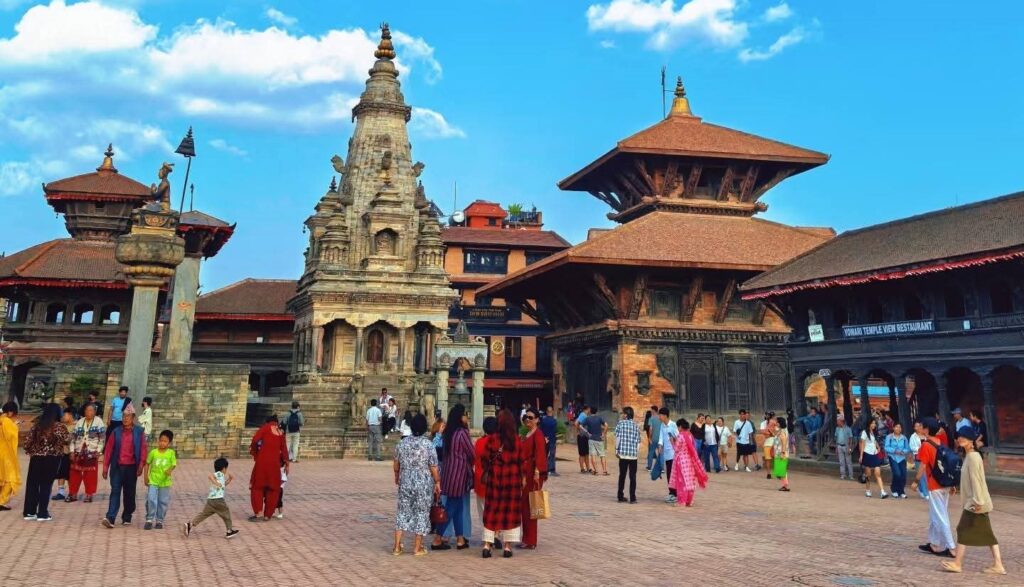
After enjoying a hearty hot breakfast at your resort, check out and board your private vehicle to descend the mountain toward Bhaktapur, the best-preserved medieval city-kingdom in the Kathmandu Valley. Entering Bhaktapur is like stepping directly into an open-air museum of Newari art, culture, and architecture. Walk across the wide, brick-paved lanes of the legendary Durbar Square, marveling at the intricately carved dark wood structures and red-brick palaces built during the Malla Golden Age.
Your local expert guide will lead you to:
- The 55-Window Palace: A royal masterpiece featuring stunning wood carvings, built by King Bhupatindra Malla.
- The Golden Gate: A magnificent, gilded brass portal decorated with deities that serves as the entrance to the inner courtyards of the Taleju Temple.
- The Nyatapola Temple: Standing proud at over 30 meters tall, this five-story temple is the tallest pagoda structure in the valley, designed to survive seismic shocks through layered, tapered engineering.
- The Pottery Square: A fascinating courtyard where local artisans throw clay on large wooden wheels, drying thousands of clay pots under the warm sun.
Pro Tip: While exploring Bhaktapur’s ancient alleyways, stop at a local sweet shop to try Juju Dhau, the iconic “King of Yogurt”. Made from fresh buffalo milk and sweetened with cardamom and honey, this thick, creamy yogurt is fermented in clay pots, absorbing a unique, rich flavor that is famous across Nepal.
Afternoon: The Spiritual Serenity of Boudhanath Stupa
From Bhaktapur, make your way back toward the heart of Kathmandu to visit Boudhanath Stupa, one of the largest spherical Buddhist stupas in the world and a deeply sacred pilgrimage center for Tibetan Buddhists. The stupa’s massive white dome represents the element of water, while the golden spire above features the protective, compassionate eyes of the Buddha painted on all four sides, watching over the valley.
As late afternoon arrives, the stupa comes alive with spiritual energy. Join hundreds of local Tibetan refugees, monks in deep maroon robes, and pilgrims as they perform the ritual kora—walking clockwise around the circular base of the stupa. The air is thick with the scent of burning juniper incense, the sound of rhythmic Buddhist chants, and the gentle clanging of hundreds of brass prayer wheels spun by devotees. Climb to a rooftop cafe overlooking the square to enjoy a cup of hot butter tea or a refreshing lassi as the sunset colors reflect off the golden spire.
Evening: Check-in & Nightlife in Thamel
Following your spiritual experience at Boudhanath, your driver will transfer you to your boutique hotel in Thamel, the vibrant tourism center of Kathmandu. Settle into your room at Hotel Thamel Park, Traditional Comfort, or Kantipur Temple House. In the evening, step out to explore Thamel’s colorful, narrow streets. This district is a lively mix of cafes, bookstores, outdoor gear shops, and restaurants offering global cuisines. Enjoy a welcome dinner featuring a traditional Nepali cultural dance show, showcasing the vibrant music and energetic dances of Nepal’s ethnic communities.
Day 3: The Sacred Heritage of Kathmandu & Scenic Transfer to Pokhara
Morning: The Rituals of Pashupatinath & the Monkey Temple
Begin your morning at 7:00 AM with a visit to Pashupatinath Temple, located on the banks of the sacred Bagmati River. Dedicated to Lord Shiva in his manifestation as Pashupati (Lord of all Animals), this sprawling temple complex serves as the spiritual heart of Hinduism in Nepal. While the inner gold-roofed sanctum is strictly reserved for Hindu devotees, non-Hindu visitors can observe the active daily rituals from across the river. Walk along the stone terraces to witness the morning aarti, observe holy sadhus painted in sacred ash, and watch the solemn open-air cremation rituals performed on the riverside stone ghats—a powerful, deeply moving display of the Hindu cycle of life and death.
Next, your driver will take you across the city to the west to climb the hill of Swayambhunath Stupa, affectionately known as the Monkey Temple. Conquer the 365 ancient stone steps flanked by playful, protected monkeys to reach the hilltop platform. From the top, enjoy a panoramic view of the entire bowl-shaped Kathmandu Valley, surrounded by the green foothills of the Himalayas.
Afternoon: Journey to the Lake City of Pokhara
By 10:00 AM, begin your transfer to Pokhara, the starting point for adventures in the Annapurna region. You have two options for this transfer, which can be customized based on your budget and preference:
- Option A (The Private Overland Drive): Board your private vehicle with Transport Hire Nepal for a scenic road journey along the winding Prithvi Highway. Follow the deep river valleys carved by the Trishuli and Marshyangdi rivers, passing high suspension bridges, lush terraced rice fields, and vibrant roadside markets. Stop en route at a riverside restaurant to enjoy fresh, local fish or a traditional thali set. The drive typically takes 6 to 7 hours, offering an authentic look at rural life in Nepal.
- Option B (The Scenic Mountain Flight): If you prefer to maximize your time, take a brief 25-minute domestic flight from Kathmandu to Pokhara International Airport. On a clear day, secure a seat on the right-hand side of the aircraft to enjoy a dramatic, eye-level view of the entire central Himalayan range. Your driver will meet you at the Pokhara terminal upon landing.
Evening: Sunset Serenity on Phewa Lake
Arrive in Pokhara by late afternoon and check into your Lakeside resort—such as the elegant Hotel Barahi, Temple Tree Resort, or the waterfront resort Waterfront Resort. Lakeside Pokhara has a remarkably relaxed, peaceful energy that stands in complete contrast to the bustling streets of Kathmandu.
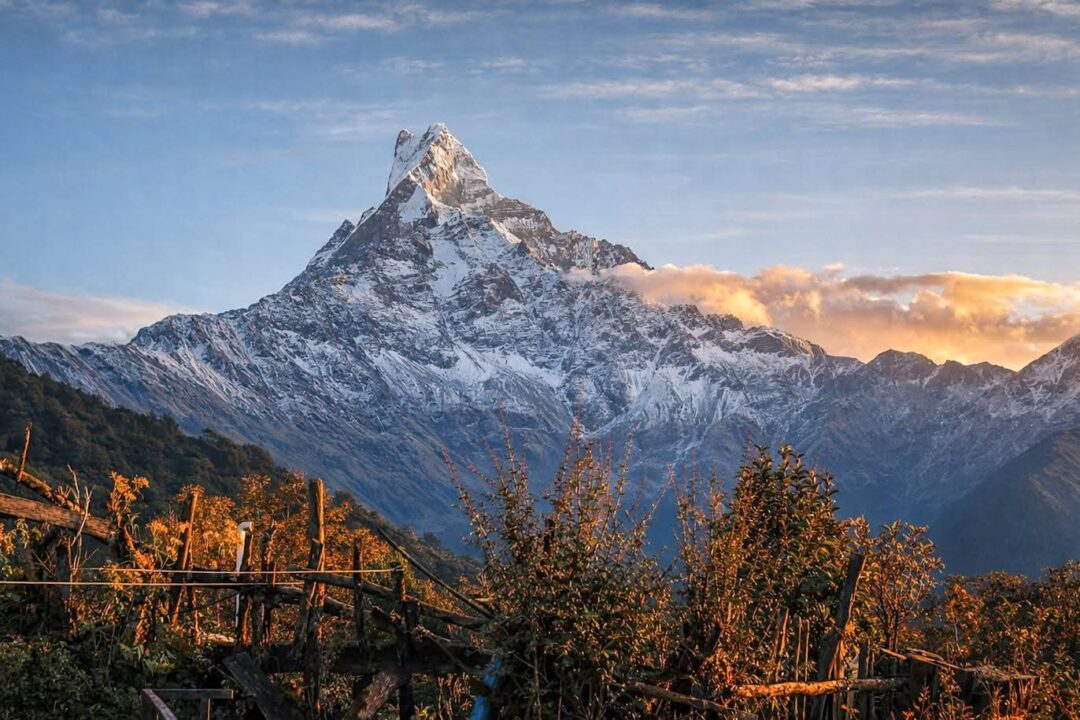
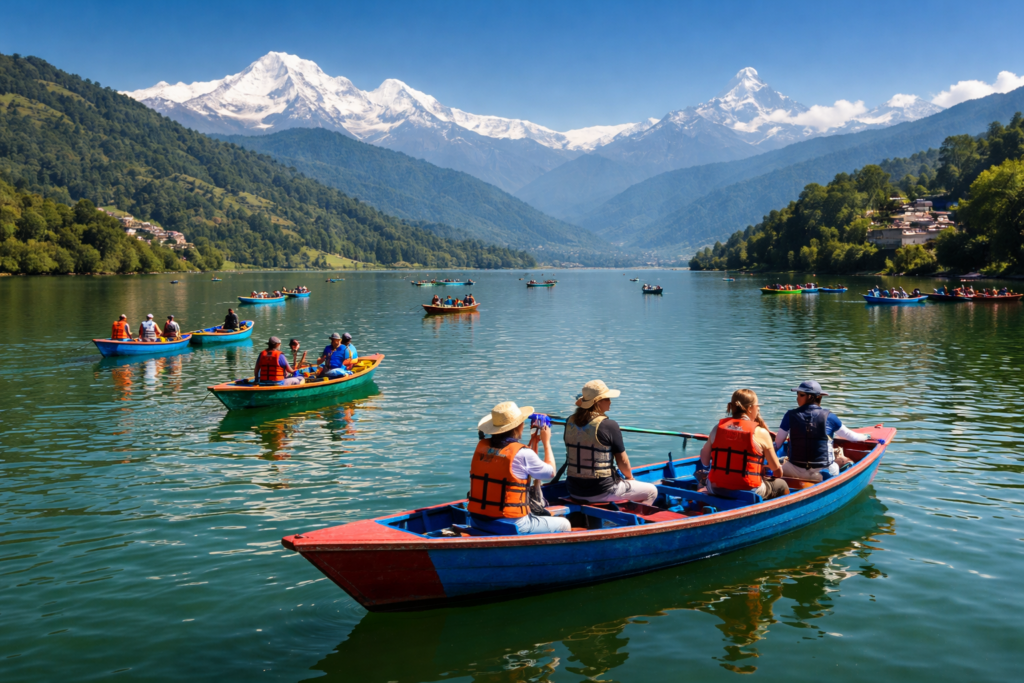
As the sun begins to set, head to the shore of Phewa Lake. Rent a colorful, hand-paddled wooden Doonga (boat) and glide out onto the mirror-like waters. If the skies are clear, watch in awe as the snow-covered, pyramid-shaped peak of Mount Machapuchare (Fishtail Peak, 6,997m) reflects perfectly on the lake’s surface, glowing in shades of copper and gold. Conclude your evening with a candlelit dinner at a lakeside restaurant, listening to live acoustic music with a view of the dark mountains.
Day 4: Sarangkot Sunrise & a Day of Adventure in Pokhara
Early Morning: The Annapurna Fire
Wake up at 4:30 AM and board your private SUV to climb the winding road to Sarangkot Hill Station, perched on a high ridge overlooking the Pokhara Valley. Step onto the viewing deck in the chilly morning air. As the first light of dawn begins to paint the sky, watch as the snow-clad peaks of the Annapurna Massif, Dhaulagiri (8,167m), and Machapuchare slowly light up with a soft, pink glow, quickly transitioning to a brilliant, burning gold.
Adrenaline Add-on: If you are feeling adventurous, Sarangkot is globally recognized as one of the premier paragliding destinations in the world. Book a tandem paragliding flight to launch off the ridge with an expert pilot, soaring high above terraced farmlands and local villages with the Annapurnas on your horizon, before landing gently on the shore of Phewa Lake.
Morning: Island Temples & Roaring Waterfalls
Return to your hotel for a hot breakfast, then begin a comprehensive tour of Pokhara’s natural wonders. First, take a boat ride back onto Phewa Lake to visit the Tal Barahi Temple, a double-tiered pagoda temple dedicated to the protector deity Durga, situated on a small island in the center of the lake.
Next, drive to Davis Falls (locally known as Patale Chhango). Here, the rushing waters of the Pardi Khola river plunge down a rocky gorge and vanish into an underground cavern. Directly across the street, explore the sacred Gupteshwor Mahadev Cave. Descend a steep, spiral stone staircase into the damp limestone cave to find a sacred shrine dedicated to Lord Shiva. If you venture deeper into the cave, you can peer through a dark rock crevice to see the roaring waters of Davis Falls plunging directly into the cavern.
Afternoon: Shanti Stupa & the International Mountain Museum
Drive up the ridge on the opposite side of the lake to visit the majestic World Peace Pagoda (Shanti Stupa). Built by Japanese Buddhist monks, this brilliant white dome stupa offers a commanding, 360-degree view of Pokhara city, Phewa Lake, and the Annapurna range. Conclude your sightseeing with a visit to the International Mountain Museum. This sprawling museum is dedicated to the mountains of Nepal, the legendary climbers who have scaled them, and the unique cultures of the Sherpa, Gurung, and Thakali people who inhabit the high Himalayan valleys.
Evening: Cinema & Lakeside Vibes
Spend your evening relaxing along Lakeside Pokhara. For a unique experience, visit the Movie Garden, an open-air cinema set amidst lush gardens in Lakeside, where you can watch independent movies under the stars while enjoying fresh popcorn and drinks. Conclude your day with a delicious meal of wood-fired pizza at the Roadhouse Cafe or try authentic Thakali Dal Bhat—featuring rich lentil soup, spiced mustard greens, and local pickles—at a traditional lakeside restaurant.
Day 5: Pokhara to Chitwan National Park (Wild Terai Plains)
Morning: From High Mountains to Subtropical Lowlands
After an early breakfast, check out of Pokhara and board your private vehicle to begin your journey south toward Chitwan National Park. The 160-kilometer drive descends from the Himalayan foothills to the flat, fertile plains of the Terai. The winding mountain road follows the rushing Trisuli River before expanding into the wide plains of Chitwan, passing beautiful green sal forests, lush banana plantations, and farming villages.
Afternoon: Check-In & Tharu Cultural Village Walk
Arrive in the tourist town of Sauraha, the gateway to Chitwan National Park, by early afternoon and check into your jungle resort. Lodges like Green Park Chitwan, Hotel Parkside, or the luxury Meghauli Serai offer excellent jungle hospitality. Enjoy a refreshing welcome drink while your expert naturalist guide briefs you on your upcoming jungle adventures.
In the late afternoon, set off on a guided walking tour through a traditional Tharu Village. The Tharu are the indigenous inhabitants of the Terai plains, having lived in harmony with the wild Terai jungle for centuries. Learn about their unique, traditional mud-and-clay houses decorated with animal motifs, observe their ancient agricultural tools, and experience their warm, peaceful way of life.
Evening: The Fire Dance of the Tharu
As night falls, gather at the community center or resort courtyard for a spectacular Tharu Cultural Show. Watch energetic, rhythmic performances featuring the famous Tharu Stick Dance, where dancers clash wooden batons in complex, fast-paced choreographies to the beat of traditional drums. This is followed by the mesmerizing Peacock Dance and fire rituals. Conclude your evening with a local dinner buffet at your jungle lodge, falling asleep to the distant calls of deer and the rhythmic chirping of jungle crickets.
Day 6: Full-Day Deep Jungle Safari Adventures in Chitwan
Early Morning: Dawn Bird-Watching Walk
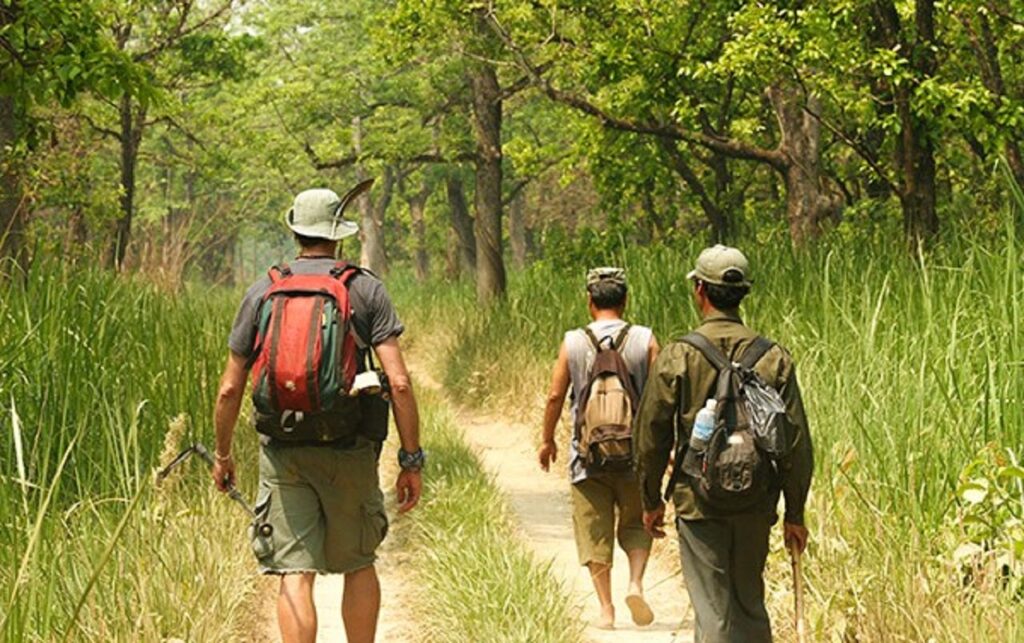
Wake up at 5:30 AM to join your naturalist guide for a peaceful, pre-dawn walking safari along the misty forest periphery. Chitwan is a birdwatcher’s paradise, home to over 600 species of resident and migratory birds. In the soft morning light, look for colorful kingfishers, giant hornbills, paradise flycatchers, and elegant peacocks displaying their plumage on the riverbanks.
Morning: Canoe Ride & Elephant Breeding Center
After breakfast, make your way to the banks of the Rapti River. Step into a traditional, narrow dugout canoe carved from a single tree trunk and glide silently down the calm river. As the river mist rises, spot marsh mugger crocodiles sunning themselves on the sandy shores and the long-snouted, endangered fish-eating Gharial crocodiles swimming near the banks.
Disembark and walk to the Elephant Breeding Center, a conservation facility dedicated to protecting and breeding Asian elephants. Observe mother elephants with their playful, energetic calves and learn about the park’s scientific conservation efforts to support the local elephant population.
Afternoon: Thrilling 4WD Jeep Safari
Return to your lodge for lunch, then prepare for the highlight of your Chitwan adventure: a deep Jeep Safari into the national park’s core zone. Board an open-top, 4WD vehicle and cross the river to venture deep into the wilderness. Your naturalist’s trained eyes will scan the dense sal forests and towering elephant grass. You are highly likely to spot the magnificent, armored Greater One-Horned Rhinoceros grazing in the swamps, families of wild boars, spotted chital deer, barking deer, sloth bears, and rhesus monkeys. If luck is on your side, you may catch a glimpse of the top predator of this ecosystem: the majestic Royal Bengal Tiger.
Evening: Sunset over the Rapti River
After your dusty jungle safari, unwind at a riverside beach bar along the Rapti River. Sip a cold local Gorkha beer or a refreshing drink as you watch a golden sunset melt over the jungle canopy. Watch as local fishermen paddle their dugout canoes back to port, and wild deer graze peacefully on the opposite bank in the twilight. Conclude your final night in the Terai with a relaxed barbecue dinner under a starlit sky.
Day 7: Chitwan to Kathmandu & Final Departure
Morning: Transfer Back to the Capital
Enjoy your final breakfast amidst the peaceful sounds of the jungle, then check out of your resort. Your private vehicle will pick you up for your drive back to the Kathmandu Valley via the Prithvi Highway (approx. 5 to 6 hours). As you climb back into the hills, enjoy the changing scenery from the flat Terai plains back to winding river canyons and terraced hills.
Afternoon: The Architectural Splendor of Patan Durbar Square
Arrive in Kathmandu by early afternoon and proceed directly to Lalitpur to explore Patan Durbar Square, a royal palace complex known as the “City of Fine Arts”. Patan exhibits some of the finest examples of Newari stone carving and metalwork in the world.
Explore:
- The Krishna Mandir: A stunning 17th-century temple built entirely of carved stone, displaying intricate panels depicting scenes from the Mahabharata and Ramayana.
- The Golden Temple (Hiranya Varna Mahavihara): A beautiful, multi-tiered Buddhist monastery adorned in gilded copper plates and bronze statues.
- The Patan Museum: Housed in the ancient royal palace, this museum is recognized as one of the best in South Asia, displaying an exquisite collection of sacred bronze statues and architectural wood carvings.
Late Afternoon: Last-Minute Souvenir Shopping in Thamel
Your driver will transfer you to Thamel for a final stroll through its busy markets. This is the perfect opportunity to purchase unique, authentic souvenirs to carry home:
- Pashmina Shawls: Exquisite, hand-woven soft cashmere wraps.
- Singing Bowls: Ancient metal bowls that produce deep, harmonic vibrations when rubbed with a wooden mallet, used for healing and meditation.
- Nepali Tea & Spices: Highly aromatic Orthodox Himalayan tea leaves and local spices.
- Tibetan Prayer Flags & Thangka Paintings: Colorful spiritual items and intricate religious artwork painted on cotton canvas.
Evening: Say Goodbye to the Himalayas
According to your flight schedule, your private vehicle will transfer you to Tribhuvan International Airport. Board your aircraft carrying a heart filled with warmth, a backpack full of memories, and a deep appreciation for the beauty, culture, and hospitality of Nepal!
Why Choose a Nepal Tour?
Traveling to Nepal is not merely a vacation; it is an incredibly enriching, often transformative travel experience. For many, a single visit is never enough—a sentiment beautifully captured in the national tourism slogan: “Naturally Nepal: Once is Not Enough.”
- Spiritual Harmony: Nepal is one of the few places on Earth where Hinduism and Buddhism have coexisted peacefully for thousands of years, creating a unique spiritual culture. It is common to see Hindu deities worshipped inside Buddhist stupas, and Buddhist symbols integrated into Hindu temples.
- Diverse Landscapes: Despite its small geographic footprint, Nepal offers incredible geographic diversity, climbing from subtropical Terai lowlands (at just 100m elevation) to the highest mountain peaks on earth.
- Warm Hospitality: The Nepalese people are globally renowned for their genuine warmth, kindness, and hospitality. The ancient local Sanskrit proverb “Atithi Devo Bhava” (The Guest is God) is deeply practiced here, ensuring every visitor feels safe, respected, and protected.
- Unrivaled Wildlife: Nepal has achieved historic success in conservation, allowing visitors to view rare, endangered species like the Greater One-Horned Rhinoceros and the Royal Bengal Tiger up close in their natural habitat.
Best Time to Visit Nepal
Nepal exhibits distinct seasonal changes, making weather planning crucial for clear mountain views and smooth road travel.
| Season | Months | Weather & Sightseeing Conditions |
|---|---|---|
| Autumn (Peak) | September – November | Clear blue skies, crisp mountain air, and ideal road travel conditions |
| Spring (Optimal) | March – April | Mild temperatures, blooming rhododendrons, and lush green scenery |
| Winter (Cool) | December – February | Sunny but cold days; excellent for lower-elevation touring |
| Monsoon (Rainy) | June – August | Heavy rains, higher landslide risk, and cloud-covered mountain peaks |
Autumn (September to November) – Peak Season
This is the absolute best time to visit Nepal. The monsoon rains have cleared away all atmospheric dust, leaving pristine blue skies and crystal-clear Himalayan views. Temperatures are warm and comfortable during the day and pleasantly cool at night. Note: This is the busiest tourist window, so early booking for hotels and transport is essential.
Spring (March to April) – Rhododendron Season
This is the second-best season to travel. Temperatures are warm, and the valleys come alive with color as beautiful red and pink rhododendron forests bloom across the hills. While there can be occasional afternoon haze, morning mountain views remain excellent.
Winter (December to February) – Cozy Lowlands
Winter is an excellent time for low-elevation cultural touring in Kathmandu, Pokhara, and Chitwan. While mountain passes can face heavy snowfall, the cities experience sunny, crisp days with cool temperatures, and the crowds are significantly thinner.
Monsoon (June to August) – Rain & Landslides
The summer monsoon brings heavy rains, landslide-related road delays, and cloud cover that blocks mountain views. This is not recommended for first-time travelers, though it offers incredibly lush, green landscapes for those who do not mind the rain.
Deep-Dive Destination Guides
Kathmandu Tour: A Tapestry of History
Kathmandu, Lalitpur (Patan), and Bhaktapur were once three separate rival kingdoms, each ruled by their own kings who competed to build the most grand and beautiful palaces. This historical competition created an exceptional concentration of UNESCO-listed monuments across the valley floor.
The Three Historic Durbar Squares
- Kathmandu Durbar Square: Located in the city center, this square features beautiful brick temples, courtyards, and the old Hanuman Dhoka Palace. It is home to the Kumari Ghar, the beautifully carved wood residence of the living Hindu Goddess Kumari, a young virgin girl selected through strict spiritual rituals.
- Patan Durbar Square: Located in Lalitpur, this square is famous for its elegant stone architecture, including the towering Krishna Mandir and the Golden Temple, which exhibit exceptional craftsmanship.
- Bhaktapur Durbar Square: Described as a living museum of medieval art and crafts, this quiet, pedestrian-only square is famous for its 55-window palace, Pottery Square, and ancient stone streets.
Sacred Hindu Temples
- Pashupatinath Temple: This ancient temple complex along the Bagmati River is the most sacred Hindu temple dedicated to Lord Shiva in Nepal, playing a central role in spiritual life. Non-Hindus can observe daily rituals, cremations, and sadhus from across the river banks.
Sacred Buddhist Stupas
- Boudhanath Stupa: One of the largest spherical stupas in the world, serving as a peaceful sanctuary for Tibetan pilgrims.
- Swayambhunath Stupa: A beautiful hilltop stupa famous for its panoramic views and playful monkeys, combining both Hindu and Buddhist elements.
Nagarkot Tour: The Himalayan Balcony
Nagarkot is the ultimate retreat for travelers who want to experience the breathtaking beauty of the Himalayas without committing to a physically demanding alpine trek.
- Sunrise & Sunset Views: On a clear day, Nagarkot’s high ridge-line provides panoramic views of the central Nepalese Himalayas. Grab a hot cup of tea and watch as the sun slowly paints the snowy peaks in shades of copper and gold.
- Trekking and Nature Walks: For those who enjoy hiking, Nagarkot is the starting point for several scenic day treks. The most popular is the Nagarkot to Changu Narayan Day Hike. This scenic 5 to 6-hour walk descends along mountain ridges, passing through local Tamang and Newari farming villages, pine forests, and terraced farmlands, before ending at the ancient Changu Narayan Temple.
Pokhara Tour: The Valley of Lakes
Pokhara is a charming, relaxed mountain town flanked by the massive, snow-covered Annapurna Range. It is the starting point for most treks in Nepal and is known as the adventure capital of the country.
- Phewa Lake: A tranquil lake surrounded by green forests, where you can go boating with stunning mountain reflections.
- Davis Falls & Gupteshwor Cave: A unique waterfall that plunges underground into a limestone cave temple dedicated to Lord Shiva.
- Sarangkot Hill: The premier location for watching the sunrise over the high Annapurna and Dhaulagiri mountain ranges.
- Adrenaline Sports: Pokhara is globally famous for paragliding over Phewa Lake , zip-lining , and taking ultralight flights to soar next to snow-covered peaks.
Chitwan Tour: Wildlife of the Terai Plains
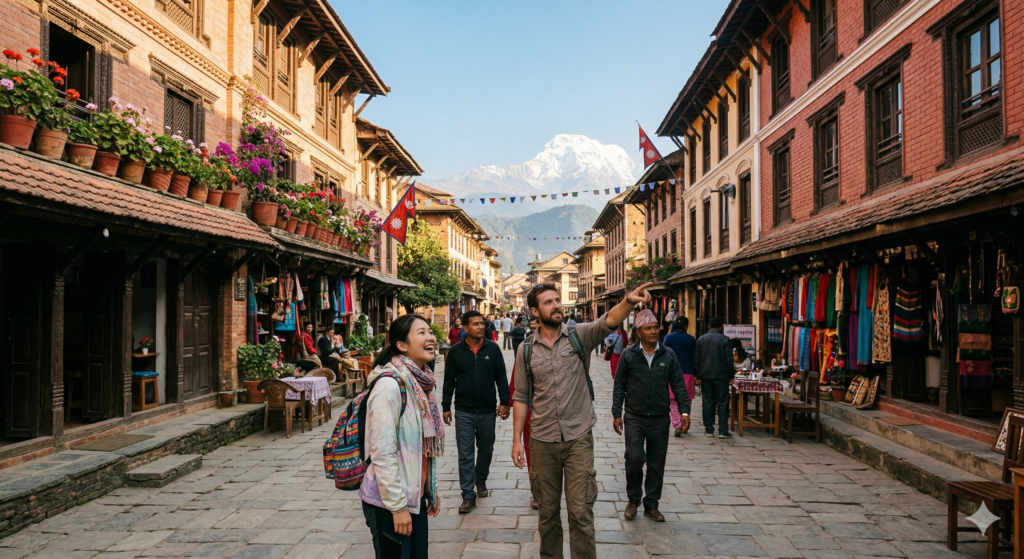
Chitwan National Park protects a subtropical lowland jungle that stands in complete contrast to the high, snow-capped Himalayas.
- Thrilling Wildlife Safaris: Venture deep into the national park in an open 4WD vehicle, tracking exotic species like the Greater One-Horned Rhinoceros, deer, monkeys, leopards, and Royal Bengal Tigers.
- River Canoeing: Glide silently down the calm Rapti River in a hand-paddled dugout canoe, spotting crocodiles and colorful water birds along the sandy shores.
- Tharu Cultural Heritage: Engage with the indigenous Tharu community through guided village tours, learning about their peaceful agricultural traditions and vibrant stick dances.
Food and Accommodation Guide
Accommodation: Where to Stay
Nepal offers a wide range of accommodation options, from basic, low-cost budget guesthouses to beautiful, five-star heritage hotels.
- Budget Hostels & Guesthouses (USD 10 to USD 20 per night): These basic, clean rooms are abundant in Thamel (Kathmandu) and Lakeside (Pokhara), featuring hot showers, free Wi-Fi, and cozy shared spaces. They are ideal for budget-conscious backpackers.
- Boutique & Mid-Range Hotels (USD 40 to USD 100 per night): These beautiful, comfortable properties offer excellent service, decorated with traditional Nepalese motifs. Excellent choices include Kantipur Temple House and Traditional Comfort in Kathmandu, Hotel Barahi and Temple Tree Resort in Pokhara, and Green Park or Hotel Parkside in Chitwan.
- Luxury Heritage Resorts (USD 150+ per night): For world-class hospitality, stay at properties like Dwarika’s Hotel in Kathmandu (a museum-like property protecting centuries of hand-carved wood heritage) , Tiger Mountain Pokhara Lodge , or Meghauli Serai in Chitwan.
Food: A Gastronomic Adventure
Nepali cuisine is a flavorful, healthy blend of spices, utilizing fresh, local ingredients.
- Thakali Dal Bhat (The National Dish): As the local saying goes, “Dal Bhat Power, 24 Hour”. This healthy, complete meal is eaten twice daily by locals. It features steamed basmati rice (Bhat), rich lentil soup (Dal), seasonal vegetable curries, spiced mustard greens, and a hot pickle chutney (Achaar). The version served by the Thakali community of the Kali Gandaki valley is especially famous for its rich flavor and use of local ghee.
- Momos (Savory Dumplings): These delicious, steaming hot dumplings are Nepal’s most famous street food. They are stuffed with spiced chicken, buffalo meat, or minced vegetables, steamed or fried, and served with a spicy sesame tomato dipping sauce.
- Newari Delicacies: The Newari community of the Kathmandu Valley has their own rich food culture. Try Egg Bara (a savory lentil pancake topped with egg), Yomari (a sweet, fish-shaped steamed rice flour dumpling stuffed with molasses and sesame seeds), and Buff Sekuwa (spiced grilled buffalo skewers).
Logistical Guide: Vehicle, Driver, and Tour Guide Services
Navigating Nepal’s winding, mountainous roads, traffic, and local regulations can be challenging for international visitors. Securing the right transportation and guides is essential for a safe, comfortable, and stress-free journey.
| Transportation Method | Key Realities & Strategic Advantages |
|---|---|
| Private Vehicle Hire (AC Sedan, Scorpio Jeep, Hiace Van) | Highest safety on mountain roads, AC/heating comfort, fully customized photo and rest stops |
| Domestic Air Transfers | Saves up to 2 days of highway travel; fast, reliable, and highly scenic mountain flights |
| Tourist Coaches (Buses) | Lowest cost option, but prone to traffic congestion, road conditions, and weather delays |
Choosing the Right Vehicle
At Transport Hire Nepal, we offer a range of vehicles to suit your travel style, group size, and budget:
- Private Sedan Car: Best for 1–3 passengers. Comfortable seating with air conditioning. Ideal for couples or small families.
- SUV / JEEP (4WD Scorpio): Best for 1–5 passengers. Recommended for rough road comfort and long-distance travel.
- Van (Toyota Hiace): Comfortable option for groups up to 14 passengers.
- Mini Bus: Best for 14–20 passengers.
- Private Tourist Bus: Best for 20–35 passengers.
The Role of a Professional Driver
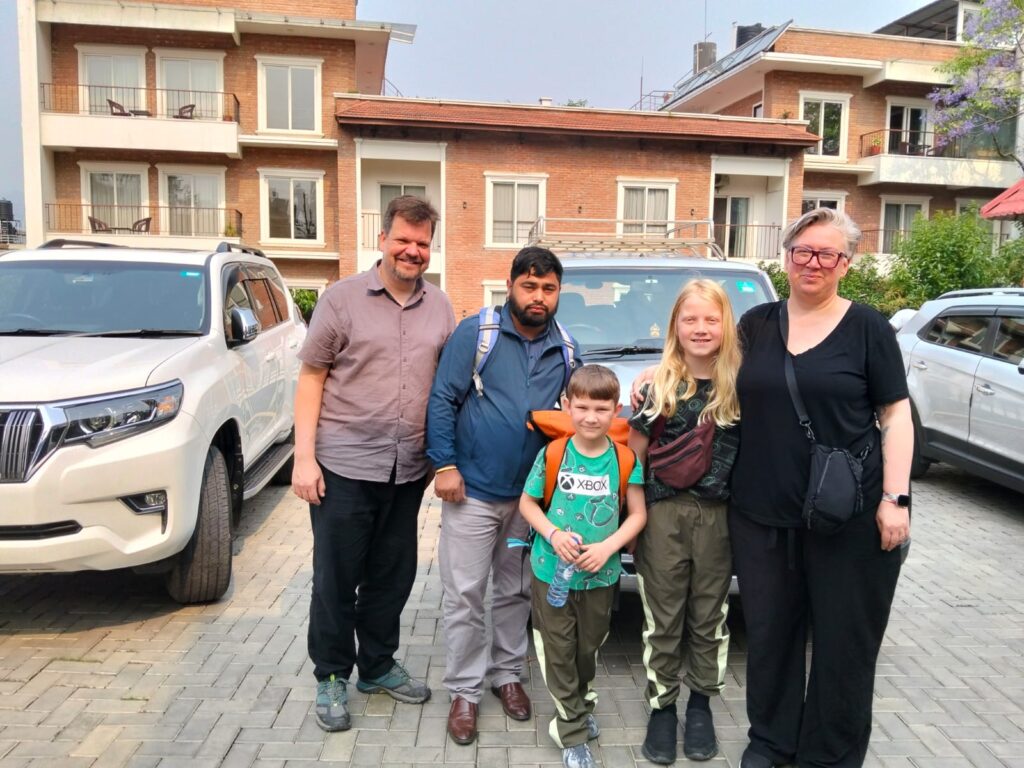
Nepal’s highway conditions require specialized driving experience. The local drivers provided by Transport Hire Nepal are licensed, highly trained, and deeply familiar with the winding curves, narrow sections, and construction updates of mountain roads like the Prithvi Highway. They prioritize passenger safety, follow safe speed limits, avoid risky overtaking, and serve as friendly, helpful companions. They know the best, cleanest spots along the highway for tea, meals, restroom breaks, and stunning photography viewpoints.
Why You Need a Professional Licensed Tour Guide
While exploring ancient temple complexes and royal squares, having a licensed, English-speaking local guide makes a massive difference. The stories, mythology, and historical details behind these sites are complex. A knowledgeable guide can explain the complex iconography of Hindu carvings and Buddhist paintings, the deep history of the ancient kings, and local customs and etiquette, enriching your experience tenfold.
Why Tour with Transport Hire Nepal?
Established in 2015 and based in Thamel, Kathmandu, Transport Hire Nepal is a premier, highly trusted travel and transportation service provider dedicated to making travel across Nepal safe, reliable, and memorable.
- Safety as the Highest Priority: All vehicles are comprehensively insured, undergo regular inspections and rigorous maintenance, and are equipped with standard safety features.
- Punctuality & Reliability: With a 24/7 customer support team and an instant booking system, we guarantee on-time pickups from hotels, homes, and airports, eliminating waiting stress.
- Knowledgeable, Friendly Drivers: Our professional drivers possess extensive expertise on both highway and rugged mountain routes, ensuring passenger comfort throughout long drives.
- Transparent Pricing Policy: All quotes are inclusive of fuel, driver fees, allowance, parking, and road taxes with absolutely no hidden costs, allowing travelers to plan their budgets with confidence.
- Customizable Travel Flexibility: We give customers the complete freedom to choose their own travel plans, routes, and spontaneous sightseeing stops en route.
Frequently Asked Questions (FAQs)
Q1: Do I need a visa to travel to Nepal?
Yes, most international visitors need a visa to enter Nepal. Fortunately, a Visa on Arrival is widely available at Tribhuvan International Airport. You will need a valid passport (with at least 6 months validity), passport-sized photos, and cash in USD (standard fees: USD 30 for 15 days, USD 50 for 30 days, or USD 125 for 90 days). Note: Citizens of India do not require a travel visa but must carry a valid passport or Voter ID card for identification.
Q2: Is Nepal safe for solo travelers and women?
Yes, Nepal is globally recognized as one of the safest, most peaceful, and welcoming travel destinations in South Asia. Violent crime targeting tourists is extremely rare, and the local culture is highly protective of travelers. Standard safety practices like avoiding unlit areas alone at night and keeping valuables secure are always recommended.
Q3: What is the local currency, and can I use credit cards?
The official currency is the Nepalese Rupee (NPR). Credit cards (Visa and Mastercard) are widely accepted in hotels, established restaurants, and boutique shops in Kathmandu and Pokhara Lakeside. However, cash remains essential for local markets, street food, and entry tickets. If visiting from India, note that Indian currency notes higher than the 100-rupee denomination are strictly banned in Nepal; carry sufficient 100-rupee notes.
Q4: What is the entrance fee for major UNESCO heritage sites in Kathmandu?
Entrance fees vary across the monument zone.
| Site | Foreigners Fee (NPR) | Approx. USD |
|---|---|---|
| Kathmandu Durbar Square | 1,000 | $7.50 |
| Patan Durbar Square | 1,000 | $7.50 |
| Bhaktapur Durbar Square | 1,800 | $13.50 |
| Pashupatinath Temple Complex | 1,000 | $7.50 |
| Boudhanath Stupa | 400 | $3.00 |
| Swayambhunath Stupa (Monkey Temple) | 350 | $2.60 |
Note: Steep discounts are available for nationals of SAARC and BIMSTEC countries upon presenting their passports.
Q5: Can I do high-altitude treks like Everest Base Camp in 7 days?
No, high-altitude treks like the Everest Base Camp (EBC) trek are logistically impossible in a seven-day window. The standard EBC trek requires a minimum of 11 to 12 days to complete safely, allowing for essential altitude acclimatization. If you attempt a high trek in 7 days, you face severe risks of acute mountain sickness. However, you can comfortably do short, low-elevation treks like Poon Hill (4-5 days), Mardi Himal (4-5 days), or Australian Camp (2 days) from Pokhara, which fit beautifully into shorter travel schedules.
Q6: What should I pack for a 7-day Nepal tour?
Carry light, comfortable layers that can be adjusted for changing elevations :
- Light T-shirts and long-sleeved shirts to protect against strong UV rays.
- A warm fleece jacket or sweater, as mornings and evenings in Nagarkot and Pokhara can be chilly.
- Comfortable, broken-in walking or hiking shoes.
- A lightweight rain jacket or windbreaker.
- A sun hat, high-SPF sunscreen, and polarized sunglasses.
- Insect repellent for your jungle safaris in Chitwan.
- A reusable water bottle with a built-in filter to avoid single-use plastic.
- A universal travel adapter for local wall sockets (Types C, D, and M).
Q7: Can I drink tap water in Nepal?
No, you must never drink tap water in Nepal. Always use bottled mineral water, or utilize boiled, filtered, or chemically treated water. Carrying a reusable purification bottle with a built-in hollow-fiber filter (like a LifeStraw or Sawyer) is highly recommended for safety and environment protection.
Q8: What are the cultural rules and etiquette I should follow?
Respecting local cultural norms ensures a welcoming experience :
- Always greet locals with “Namaste” (pressing your palms together at chest level).
- Always remove your shoes before entering temples, shrines, monasteries, or local homes.
- Always walk around stupas (like Boudhanath or Swayambhunath) in a clockwise direction.
- Always dress modestly inside sacred temple zones, ensuring your shoulders and knees are covered. Avoid sleeveless tops or short skirts.
- Never touch anyone’s head, as it is considered the most sacred part of the body, and never point your feet at people or religious objects.
- Always use your right hand to eat, pay, or pass objects to someone.
Q9: What is the average cost of a mid-range 7-day Nepal tour package?
The typical cost of a well-organized, mid-range 7-day tour package in Nepal ranges from NPR 60,000 to NPR 150,000 (~USD 675 to USD 1,125) per person. This is inclusive of mid-range hotel accommodations, private vehicle transfers, a domestic flight, guided sightseeing tours, entry tickets, and full board meals on safaris.
Q10: Is ride-sharing available in Kathmandu?
Yes, ride-sharing is highly active, safe, and widely used for navigating city traffic in Kathmandu. The primary local apps are Pathao and InDrive. Pathao is excellent for booking quick, low-cost motorbike taxis, while InDrive allows travelers to negotiate private car fares directly with drivers. For group travel or comfort, booking a private vehicle through a provider like Transport Hire Nepal remains the most recommended method.
Summary Directory: Logistics & Pricing Matrix
To help you plan your travel budget with confidence, the following comprehensive tables outline the current, real-world logistical costs and heritage entry fees across Nepal’s primary tourist circuits.
Private Vehicle Rental Costs (Transport Hire Nepal)
All rates are inclusive of fuel, driver fees, allowance, parking, and road taxes with no hidden charges.
| Journey Route | Sedan Rate (1–3 Pax) | SUV / Jeep Rate (4–5 Pax) | Toyota Hiace Van Rate (6–13 Pax) |
|---|---|---|---|
| Kathmandu → Pokhara | USD 150.00 | USD 185.00 | USD 230.00 |
| Kathmandu → Chitwan | USD 150.00 | USD 185.00 | USD 250.00 |
| Kathmandu → Jiri | USD 150.00 | USD 185.00 | USD 270.00 |
| Full-Day Sightseeing (8 Hours) | USD 90.00 | USD 120.00 | USD 160.00 |
Comprehensive Heritage Site Entry Fees Directory
Note: Entry tickets are usually payable in cash at the entry checkpoints. Ensure you have Nepalese Rupees ready.
| Heritage Site / Monument Zone | Standard Foreign Ticket Fee | SAARC / BIMSTEC National Fee |
|---|---|---|
| Kathmandu Durbar Square | NPR 1,000.00 | NPR 500.00 |
| Pashupatinath Temple Complex | NPR 1,000.00 | Free (Indian Nationals) |
| Boudhanath Stupa | NPR 400.00 | NPR 100.00 |
| Swayambhunath Stupa | NPR 350.00 | NPR 50.00 |
| Patan Durbar Square | NPR 1,000.00 | NPR 250.00 |
| Bhaktapur Durbar Square | NPR 1,800.00 | NPR 500.00 |
| Chitwan National Park | NPR 1,500.00 – 2,500.00 | NPR 1,000.00 |
Recap: Your Unforgettable Nepal Adventure
This optimized 7-day Golden Triangle & Nagarkot Itinerary has been designed to resolve traveler anxieties regarding mountain road logistics, safety, and cultural expectations, providing an immersive, seamless vacation experience. Over the course of a single week, you will stand on high mountain ridges to witness sunrises over the Himalayas, walk through ancient UNESCO-listed medieval brick squares, glide across the quiet waters of Phewa Lake, and ride an open-top Jeep deep into subtropical forests to track wild rhinos.
By securing a private vehicle and driver with a trusted local partner like Transport Hire Nepal, you eliminate the hassle of local public transport. This allows you to sit back, relax, and fully savor the spectacular landscapes, rich spiritual traditions, and warm hospitality that make Nepal one of the world’s most magical destinations. The Himalayas are calling—it is time to pack your bags and embark on the adventure of a lifetime!