Pokhara to Kathmandu Vehicle Service
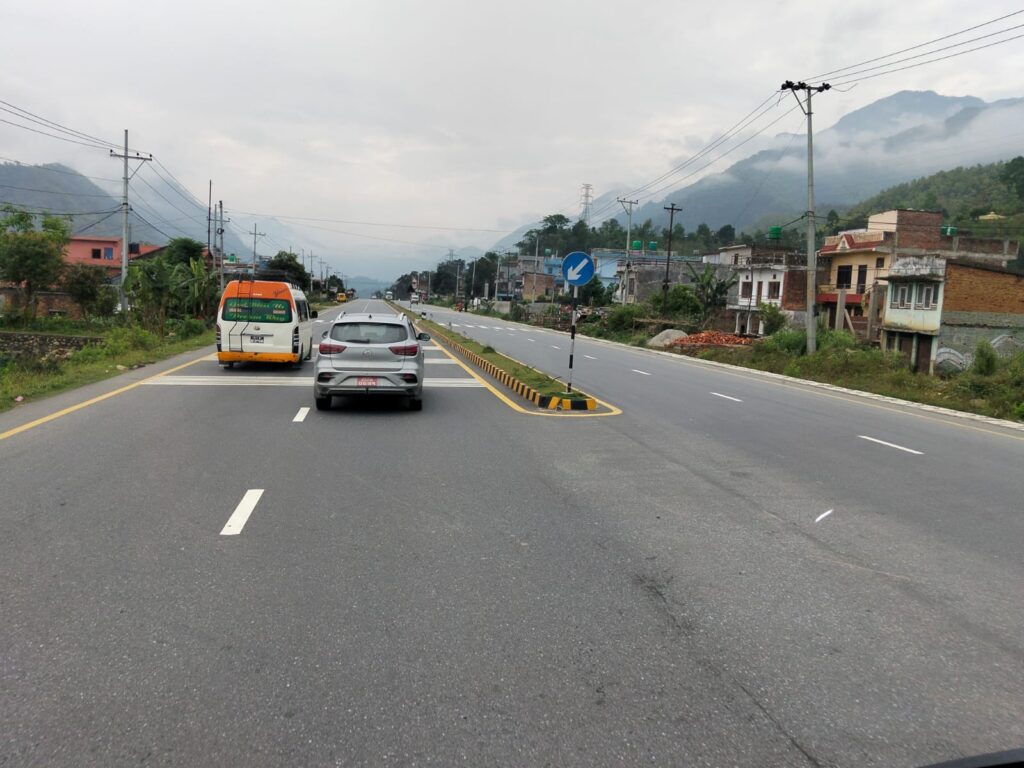
The overland corridor connecting Pokhara, the serene tourism capital of Nepal, to Kathmandu, the vibrant and historic federal capital, represents the single most important and heavily trafficked logistical artery in the entire nation. Spanning a physical distance of approximately 200 to 206 kilometers, this cross-country journey takes travelers through the very heart of the Himalayas. The route predominantly follows the legendary Prithvi Highway (National Highway 17), winding alongside the spectacular Trishuli and Marsyangdi river valleys, cutting through deep mountain gorges, and weaving past ancient cultural townships.
Historically, this overland journey was a predictable five to six-hour drive. However, in 2026, the reality of traveling between these two hubs has been drastically altered by massive, ongoing national infrastructure projects, specifically the Muglin-Pokhara road expansion. Due to severe topographical challenges, fluctuating climatological patterns, and continuous highway upgrades, the journey is now an 8-to-12-hour expedition.
Because of this profound shift in travel time and road conditions, the traditional methods of transportation—such as cramped local buses or standard commercial tourist coaches—are increasingly being abandoned by modern travelers. While domestic flights are available and theoretically take only 25 to 35 minutes of airborne time, they come with a steep price tag ranging from $100 to $140 USD per person and are highly susceptible to sudden cancellations due to poor visibility and unpredictable mountain weather.
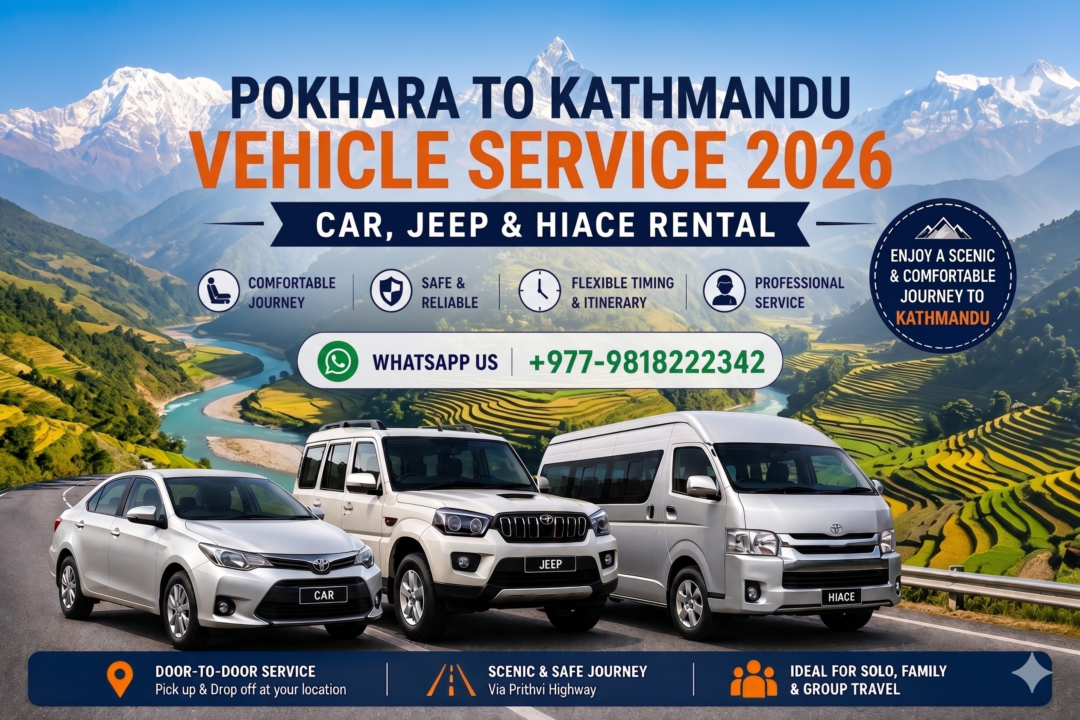
As a result, hiring a private vehicle has emerged as the premier, most reliable, and ultimately the most comfortable method for navigating this essential route. A private transfer completely transforms a potentially grueling day of transit into a highly customizable, deeply personal, and highly scenic road trip. Whether you are a solo traveler seeking the quiet intimacy of a modern sedan, a family requiring the rugged safety of a 4WD Jeep or Scorpio, or a large expedition group needing the expansive capacity of a Toyota Hiace van, private vehicle rental offers unparalleled control over your itinerary. You decide when to depart, where to stop for photographs, and how to pace your journey across the mesmerizing Nepalese landscape.
Major Attractions: Pokhara to Kathmandu Vehicle Service
One of the greatest advantages of hiring a private vehicle with Transport Hire Nepal is the absolute freedom to turn a simple transfer into a full-day sightseeing adventure. The Prithvi Highway is lined with natural wonders, cultural landmarks, and thrilling detours. Here are the major attractions you can explore during your drive:
- Begnas Lake: Located just outside the main city limits of Pokhara, Begnas Lake is the quieter, more pristine sister to Phewa Lake. A short stop here allows for a peaceful morning coffee or a brief boating excursion before the highway journey truly begins.
- The Historic Town of Bandipur: Approximately two hours into the drive, near the town of Dumre, lies the detour to Bandipur. A winding, one-hour uphill drive takes you to this beautifully preserved Newari town. Bandipur feels like a living museum, featuring traditional 18th-century wooden architecture, pedestrian-only cobblestone streets, and magnificent views of the central Himalayas. It is widely considered one of the most charming hill towns in Nepal and makes for a perfect mid-morning break.
- Manakamana Temple and Cable Car: Located in Kurintar, the Manakamana Temple is one of the most significant Hindu pilgrimage sites in Nepal, dedicated to the wish-fulfilling goddess Bhagwati. The temple is perched high on a ridge, but it is easily accessible via the Manakamana Cable Car. The cable car station at Kurintar (258 meters above sea level) whisks passengers up to the temple (1,302 meters) in just 8 to 9 minutes. The scenic ride offers breathtaking aerial views of the Trishuli River and the surrounding lush forests. A detour here typically adds about two to three hours to your overall journey.
- Trishuli River White Water Rafting: For adrenaline seekers, the Trishuli River offers some of the most accessible and exciting white water rafting in Nepal. The river parallels the highway for much of the journey. Many travelers coordinate with their driver to stop at Charaudi (81 km from Kathmandu) for a half-day, 3-to-4-hour rafting adventure. You can tackle exciting Class III rapids, swim in calm pools, and then easily resume your drive to Kathmandu in your waiting private vehicle.
- Malekhu Fish Market: As you enter the Dhading district, you will pass through Malekhu, a bustling highway town famous across the country for its local river fish. The town is lined with authentic eateries and restaurants that specialize in deep-fried fish and fish curry. It is an essential culinary stop for travelers wanting to experience authentic roadside Nepalese cuisine.
- Chandragiri Hills: As you finally approach the Kathmandu Valley via the Thankot checkpoint, you have the option to visit Chandragiri Hills. A state-of-the-art cable car takes you to the summit, providing a sweeping, panoramic view of the entire Kathmandu Valley to the east and, on clear days, an unbroken view of the Himalayan range—including Mount Everest—to the north.
Why Vehicle Hire with Transport Hire Nepal
When navigating the complexities of Nepal’s highway system, your choice of transport provider is the single most critical decision you will make. Transport Hire Nepal stands out as the premier, most trusted vehicle rental agency operating in the Kathmandu-Pokhara corridor. Established in 2015, the company has spent nearly a decade building a flawless reputation for reliability, safety, and ultimate customer satisfaction.
- Uncompromising Safety Standards: Transport Hire Nepal prioritizes your physical safety above all else. Every vehicle in their extensive fleet undergoes rigorous, scheduled mechanical inspections to ensure optimal performance on the challenging mountain roads. Their vehicles are equipped with first aid kits, necessary safety belts, and modern braking systems.
- Highly Experienced, Professional Drivers: You are not just renting a car; you are hiring a local expert. The drivers employed by Transport Hire Nepal are seasoned veterans of the Prithvi Highway. They are intimately familiar with every sharp turn, construction detour, and traffic pattern. Furthermore, they are bilingual, incredibly polite, and trained to act as informal guides, recommending the best, most hygienic highway restaurants and scenic viewpoints along the route.
- Transparent, Honest Pricing: Unlike many operators who lure tourists with low base rates only to add hidden fees for fuel, driver accommodation, or road tolls, Transport Hire Nepal operates on a strict policy of price transparency. The quote you receive includes all taxes, fuel costs, parking fees, and driver allowances. You can plan your travel budget with absolute confidence.
- Impeccable Reputation and Reviews: Transport Hire Nepal is trusted by thousands of travelers annually. They boast exceptional ratings on independent review platforms, including a strong presence on Trustpilot and TripAdvisor. Customer testimonials consistently highlight the company’s punctuality, the cleanliness of their vehicles, and the unparalleled helpfulness of their drivers, even when navigating difficult road conditions at night.
- 24/7 Dedicated Support: Travel plans can change instantly due to flight delays or sudden weather events. Transport Hire Nepal provides a 24/7 customer support service via phone and WhatsApp. Whether you need an emergency airport pickup or wish to alter your departure time at the last minute, their operational team is always awake, responsive, and ready to assist.
Highlights of the Private Transfer Experience
Choosing a private vehicle over commercial public transit offers a multitude of exclusive benefits designed to elevate your travel experience:
- Absolute Door-to-Door Convenience: Forget the stress of dragging heavy luggage through crowded city streets to reach a noisy tourist bus park at dawn. Your private driver will arrive directly at the lobby of your Pokhara hotel, load your luggage for you, and drop you off at the exact doorstep of your accommodation in Kathmandu.
- Total Departure Flexibility: Standard VIP tourist buses depart rigidly at 7:00 AM. With a private rental, you control the clock. Whether you want to leave at 5:00 AM to beat the highway traffic, or enjoy a lazy lakeside breakfast and depart at 11:00 AM, the vehicle operates entirely on your schedule.
- Unmatched Privacy and Comfort: Enduring a 10-hour drive is significantly easier when you are in your own private sanctuary. You can control the climate conditioning to your exact preference, play your own music, recline your seats without bothering strangers, and sleep peacefully without the constant interruptions found on communal buses.
- Spacious Luggage Capacity: Trekking in the Annapurna region often requires massive duffel bags, climbing gear, and multiple backpacks. Private Jeeps, SUVs, and Hiace vans offer cavernous rear storage compartments, ensuring your expensive gear is locked safely inside the vehicle rather than strapped haphazardly to the dusty roof of a public bus.
- Customizable Rest Stops: On a tourist bus, you are forced to eat when and where the syndicate dictates, often at crowded, overpriced highway cafeterias. In your private car, you can instruct your driver to stop whenever you feel hungry, need a restroom break, or spot a breathtaking mountain panorama that demands a photograph.
What to Expect: Road Conditions and Reality in 2026
To ensure a stress-free journey, it is absolutely vital to have realistic expectations regarding the current state of the Prithvi Highway in 2026. The road is currently undergoing a massive transformation, and travelers must be mentally prepared for the associated delays and physical realities of the route.
The primary source of disruption is the Muglin-Pokhara road expansion project, an ambitious initiative funded by the Asian Development Bank aimed at upgrading the highway into a modern four-lane expressway. While the 41-kilometer eastern section from Aabukhaireni to Jamune has seen successful completion and blacktopping, the western section remains heavily impacted by construction.
This critical 38.71-kilometer stretch, running from Jamune in the Tanahun district to the Seti Bridge in Pokhara, is only about 78 percent complete as of mid-2026. The project has suffered massive delays due to a combination of severe fuel shortages and the skyrocketing costs of raw construction materials. As a result, travelers will encounter long stretches of uneven, dusty, and muddy patches. Critical safety features like W-beam barriers and thermoplastic road markings are still being installed, leading to narrow, single-lane bottlenecks where traffic must alternate directions.
Furthermore, the highway is highly susceptible to the elements. Pre-monsoon and monsoon rains frequently trigger minor landslides and mudslides, particularly in the steep sections between Mugling and Naubise. The Department of Roads frequently initiates temporary blockades to allow heavy machinery to clear debris.
Because of these compounding factors, the historical travel time of 5 to 6 hours is no longer accurate. In 2026, you must expect the journey from Pokhara to Kathmandu to take anywhere between 8 and 12 hours. Traffic congestion is particularly heavy near the urban entry points of Naubise, Galchhi, and Gajuri between the hours of 10 AM and 4 PM. By setting your expectations accordingly and utilizing the superior comfort, superior suspension, and climate control of a private vehicle, you can navigate these challenges with ease and peace of mind.
Comprehensive Itineraries
Because you have total autonomy over a private vehicle rental, you are not restricted to a single route. Below are four highly detailed, word-by-word itinerary options that Transport Hire Nepal offers. You can select the schedule that best fits your travel style.
Option 1: The Classic Scenic Drive
Best for: Travelers prioritizing comfort and aiming to reach Kathmandu before dark.
- 07:30 AM – Hotel Pickup: Your professional driver from Transport Hire Nepal arrives at your Lakeside hotel. Luggage is securely loaded.
- 08:00 AM – Departure: You leave the Pokhara Valley. The initial phase of the drive runs alongside the milky-white waters of the Seti River.
- 09:45 AM – Morning Tea at Damauli: You stop at a pre-vetted roadside café in Damauli. You can stretch your legs, use the restroom, and enjoy an authentic Nepali Chiya (milk tea) while overlooking the steep river valleys.
- 12:30 PM – Lunch Break at Mugling or Kurintar: As you hit the mid-way point, your driver will recommend a highly-rated local restaurant. If you stop at the Mustang Paradise Guest House in Kurintar, you can experience an incredibly authentic Thakali Khana (traditional Nepali lentil, rice, and vegetable platter).
- 02:30 PM – Malekhu Fish Market Passing: You drive through Malekhu, famous for its deep-fried Trishuli River fish. If you’re still hungry, your driver can pull over for a quick snack.
- 04:00 PM – Navigating the Bottlenecks: You traverse the busiest sections near Galchhi and Naubise, where construction traffic peaks.
- 05:30 PM – Thankot Ascent: The vehicle begins the steep, winding hairpin ascent via the Thankot checkpoint to enter the Kathmandu Valley.
- 06:30 PM – Arrival: Direct drop-off at your hotel in Thamel, Patan, or Boudhanath.
Option 2: The Spiritual Detour (Manakamana Temple Pilgrimage)
Best for: Travelers interested in Hindu culture, architecture, and panoramic cable car rides.
- 07:00 AM – Early Departure: Leave Pokhara slightly earlier to account for the detour.
- 10:30 AM – Arrival at Kurintar (Cable Car Base): Your driver parks at the Manakamana Darshan Cable Car station.
- 10:45 AM – The Ascent: Board the cable car (Tickets are $8 USD for foreign nationals, INR 400 for Indians) . The 8-to-9-minute ride whisks you from 258 meters up to ,302 meters, offering stunning views of the Trishuli River .
- 11:00 AM – Temple Darshan: Spend an hour exploring the sacred grounds of the wish-fulfilling goddess Bhagwati, observing local pilgrims, and photographing the Himalayan backdrop.
- 12:30 PM – Descent & Lunch: Ride the cable car back down to Kurintar. Note: The cable car pauses operations for a staff lunch break between 12:00 PM and 1:30 PM, so timing your descent is crucial “. Have lunch at a riverside restaurant at the base.
- 01:45 PM – Resume Journey: Hop back into your private SUV and continue the drive along the Prithvi Highway.
- 07:00 PM – Arrival in Kathmandu: Drop-off at your Kathmandu accommodation.
Option 3: The Adrenaline Day Trip (Trishuli River Whitewater Rafting)
Best for: Adventure seekers wanting to break up a long drive with physical activity.
- 07:00 AM – Departure from Pokhara: Ensure you are wearing a swimsuit under your clothes and have a towel handy in your daypack.
- 10:30 AM – Arrival at Rafting Put-in Point (Charaudi or Phisling): Your driver takes you directly to the rafting outfitter’s riverside camp “.
- 11:00 AM – Safety Briefing & Gear: You are equipped with a life vest, helmet, and paddle, followed by a comprehensive safety briefing by licensed river guides “.
- 11:30 AM – Hitting the Rapids: Spend roughly 3 hours navigating exhilarating Class II and Class III rapids on the Trishuli River . You will also have opportunities to swim in calm pools and participate in safe cliff jumping .
- 02:30 PM – Riverside Picnic Lunch: The rafting trip concludes at Kuringhat or Fishling . Enjoy a massive buffet-style lunch on the riverbank to recover your energy .
- 03:30 PM – Back on the Road: Dry off, change into comfortable clothes, and return to your waiting private vehicle.
- 07:30 PM – Arrival in Kathmandu: Final drop-off at your hotel.
Option 4: The Heritage Hill Station (Bandipur Detour)
Best for: Photographers, history buffs, and those seeking a quiet, romantic escape.
- 08:00 AM – Departure from Pokhara: Enjoy a leisurely morning before hitting the road.
- 10:00 AM – The Dumre Turnoff: After approximately 70 to 80 kilometers of driving , your driver reaches the town of Dumre and turns off the main highway to begin a steep, winding ascent .
- 10:45 AM – Arrival in Bandipur: You arrive at the pristine, vehicle-free hilltop town of Bandipur.
- 11:00 AM to 01:00 PM – Sightseeing: Explore the incredibly preserved 18th-century Newari architecture, walk along the cobblestone streets, and take a short hike to the Thani Mai viewpoint for unbroken views of the Annapurna and Manaslu ranges.
- 01:00 PM – Lunch with a View: Dine at a heritage café overlooking the plunging Marsyangdi River valley.
- 02:00 PM – Descent to the Highway: Return to the vehicle and navigate back down to the Prithvi Highway.
- 07:30 PM – Arrival in Kathmandu: Drop-off at your hotel in the capital.
Cost Details: Transparent Pricing for Every Vehicle Class
Understanding the economics of private vehicle rental in Nepal is crucial. While the absolute cost of a vehicle is higher than a single bus ticket, private hire becomes incredibly cost-effective when the price is divided among a group of travelers. The rates provided by operators like Transport Hire Nepal are strictly calculated as flat vehicle fees, encompassing the driver’s daily wage, all automotive fuel, highway parking fees, road tolls, and applicable government taxation.
Below is the definitive 2026 pricing matrix for one-way direct transfers between Pokhara and Kathmandu:
| Vehicle Type | Ideal Group Size | Total Cost (USD) | Best Suited For |
| Sedan Private Car | 1 to 3 Persons | $150.00 | Solo travelers, couples, or small families with standard luggage. Highly economical and comfortable. |
| Private SUV / Jeep | 4 to 5 Persons | $185.00 | Families, small groups, or travelers heading onto off-road extensions. Features high ground clearance and robust suspension. |
| Private Van (Hiace) | 6 to 13 Persons | $230.00 | Medium-sized trekking groups or extended families. Offers excellent headroom, large windows, and ample luggage space. |
| Private Mini Bus (Coaster) | 14 to 20 Persons | $350.00 | Large expeditions, corporate retreats, or multiple families traveling together. |
| Private Tourist Bus | 21 to 35 Persons | $400.00 | Mega-groups requiring maximum capacity and heavy baggage transport. |
Cost Efficiency Example: If a group of 6 travelers hires a rugged Mahindra Scorpio for $160 USD, the individual cost breaks down to approximately $26.66 per person. When compared to the cost of Premium VIP Tourist Buses, which regularly charge between $18 and $26 USD per seat and offer zero privacy or schedule flexibility, the private Jeep is undeniably the superior economic and logistical choice. Note that extensive detours or overnight waiting (such as spending a night in Bandipur) will incur standard daily waiting charges and driver accommodation fees.
Vehicle Fleet and Strict Insurance Regulations
When you book with Transport Hire Nepal, you are guaranteed a vehicle that adheres to the strictest tourism regulations enforced by the Government of Nepal.
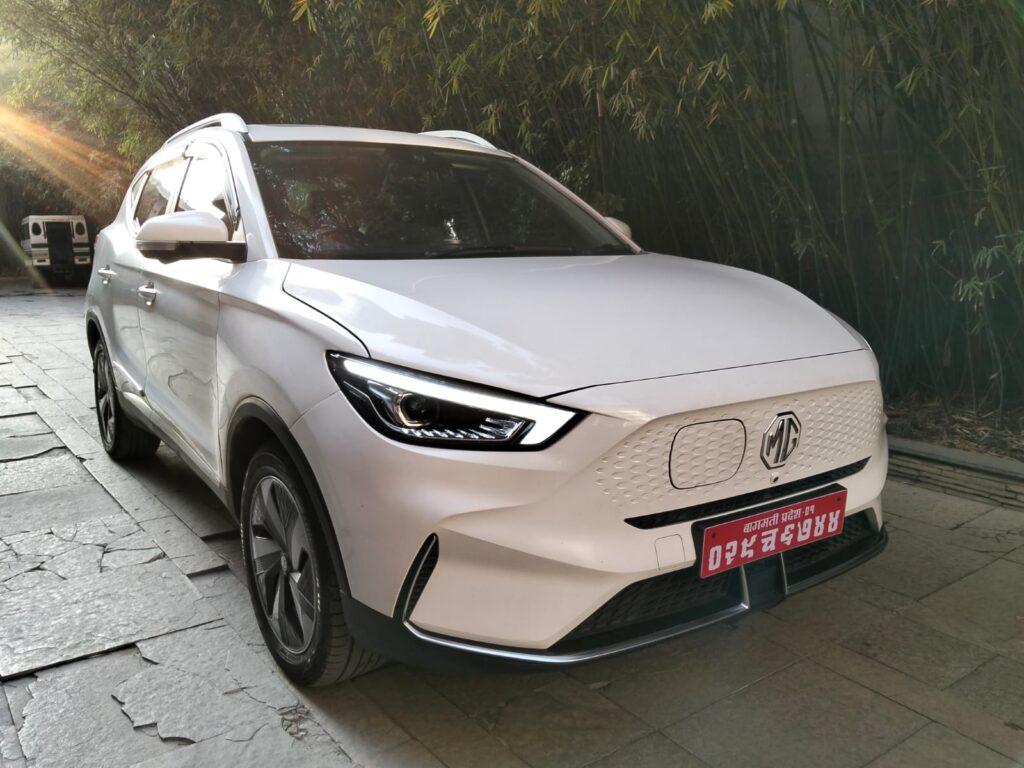
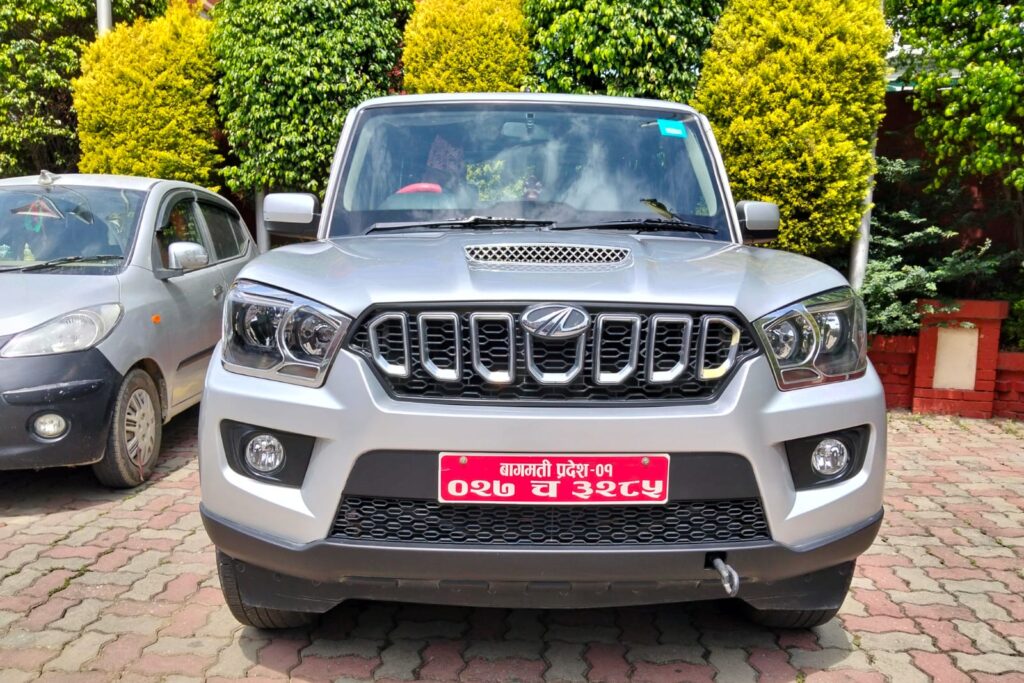
In Nepal, legitimate tourist vehicles are legally required to operate with specialized “Green Number Plates” featuring white lettering and the unique (YA) code. This green plate is not merely aesthetic; it is a vital indicator of legality and safety. Vehicles displaying this plate are exclusively registered to verified travel agencies and tourism-focused rental companies. To acquire and maintain a green plate, the vehicle must pass rigorous, regular inspections by the Department of Transport Management (DoTM) to ensure structural roadworthiness, mechanical safety, and interior comfort standards.
Crucially, green-plated tourist vehicles are mandated by law to carry comprehensive commercial insurance. This includes both total third-party liability insurance and dedicated passenger insurance coverage. This provides immense peace of mind, knowing that you are legally protected in the unlikely event of an incident. Furthermore, under recent amendments to the Tourist Transport Operation Rules, all green-plated vehicles must be equipped with mandatory safety features including seat belts for all passengers, an easily accessible first aid box, and a functional fire extinguisher.
Transport Hire Nepal’s diverse fleet includes:
- Sedans (Toyota, Honda, Skoda): Perfect for paved city driving and highway cruising, featuring deep trunks and smooth handling.
- SUVs (Mahindra Scorpio, Kia Seltos, Hyundai Creta): The backbone of Nepali mountain transit. These vehicles offer robust 4WD capabilities, vital for navigating the muddy, unpaved diversions caused by the Mugling-Pokhara construction.
- Luxury 4WD (Toyota Land Cruiser Prado): The absolute pinnacle of overland luxury. The Prado features legendary off-road capability mixed with quiet cabins, advanced climate control, panoramic windows, and superior shock absorption, making the 10-hour drive feel effortless.
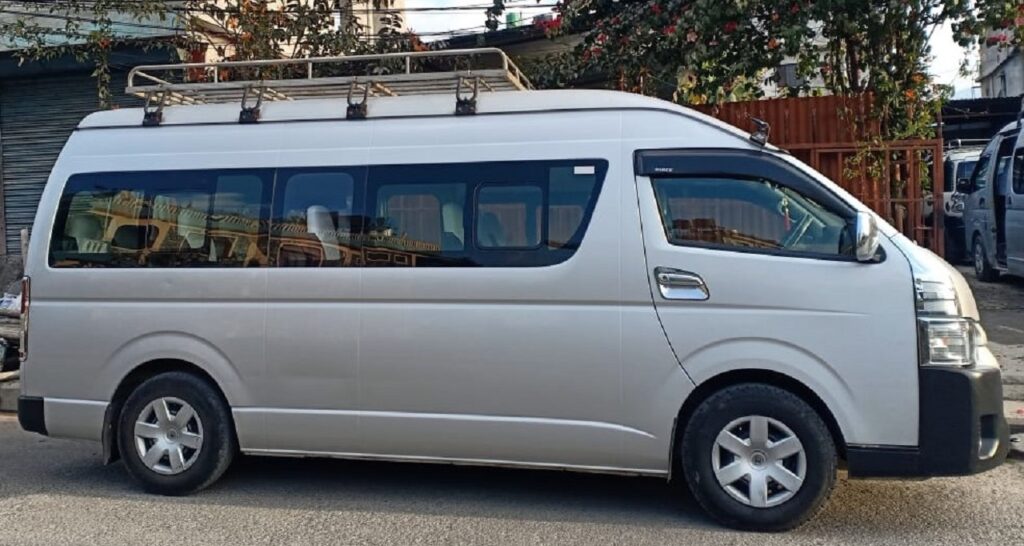
- Vans (Toyota Hiace): The undisputed king of group travel. The Hiace features an elevated roof for ample headroom, wide windows for unobstructed Himalayan views, and a dedicated rear cargo space that swallows massive trekking backpacks with ease.
Trip Maps: Understanding the Route Topography
While the physical map of the route appears straightforward, the topographical realities are complex. The journey begins in Pokhara, situated at an elevation of approximately 1,400 meters, nestled beneath the towering Annapurna massif.
- The Western Leg (Pokhara to Dumre): Leaving Pokhara, the highway initially tracks alongside the milky-white waters of the Seti River. The road drops slightly in elevation as it winds through lush, terraced hillsides, passing through the regional centers of Dulegaunda and Damauli. This section is currently the epicenter of the heaviest road expansion work.
- The Central Valleys (Dumre to Mugling): After passing Dumre (the gateway to Bandipur), the highway meets the Marsyangdi River. The road narrows as it cuts through steep, jungle-clad gorges, eventually arriving at the crucial transit town of Mugling. Here, a major suspension bridge crosses the Trishuli River, connecting the Prithvi Highway with the route heading south to Chitwan National Park.
- The River Corridor (Mugling to Naubise): Turning east, the highway fiercely hugs the edge of the Trishuli River valley. This is the most scenic, yet most geologically fragile section of the route. The road passes through Kurintar (the Manakamana cable car station), Charaudi (the rafting hub), and Malekhu. The landscape is dominated by high, rocky cliffs on one side and the rushing river on the other.
- The Final Ascent (Naubise to Kathmandu): At Naubise, the Prithvi Highway essentially merges into the Tribhuvan Highway. Here, the long, grueling, and highly congested uphill climb begins. The road features dozens of sharp hairpin turns as it ascends the steep rim of the Kathmandu Valley, finally cresting at the Thankot checkpoint before descending into the dense, vibrant urban sprawl of Kathmandu, sitting at an elevation of 1,350 meters.
Best Time to Travel: Navigating the Seasons
The physical condition of the Prithvi Highway is intrinsically linked to Nepal’s distinct seasons. Planning your trip around these meteorological patterns is essential.
- Spring (March to May): This is arguably the best time for a road trip. The weather is warm and pleasant, and the hillsides explode with blooming rhododendrons and vibrant greenery. Road conditions are generally dry and stable, offering the smoothest possible ride through the construction zones. Visibility is excellent, providing stellar views of the mountains.
- Autumn (September to November): The peak tourist season in Nepal. The post-monsoon skies are brilliantly clear, offering the sharpest, most unobstructed views of the Annapurna and Manaslu ranges from the highway. The weather is cool and crisp, making the journey highly comfortable. Because this is peak season, booking your vehicle with Transport Hire Nepal well in advance is mandatory.
- Winter (December to February): Traveling in winter is perfectly viable as the roads remain bone-dry, eliminating the risk of mudslides. However, travelers should be prepared for dense, heavy fog in the river valleys (particularly around Mugling and the Trishuli corridor) during the early morning hours, which can slow down driving speeds. It is advisable to depart slightly later, around 8:30 AM, to allow the sun to burn off the fog.
- Monsoon (June to August): This is the most challenging time to travel. Heavy, relentless precipitation softens the freshly cut embankments of the road expansion project, leading to frequent mudslides, rockfalls, and temporary road closures. The unpaved sections of the road become deep, treacherous mud. If you must travel during the monsoon, hiring a high-clearance 4WD Jeep or Scorpio is absolutely imperative for safety, as standard sedans may struggle with the deep ruts and flooded patches.
FAQs
1. What is the actual travel time from Pokhara to Kathmandu in 2026?
While outdated blogs and guidebooks frequently claim the journey takes 6 to 7 hours, the current reality in 2026 is vastly different. Due to the massive, ongoing 4-lane expansion of the Muglin-Pokhara highway, coupled with heavy traffic at the Thankot entry point, you must anticipate the drive to take between 8 and 12 hours.
2. Is it safe to travel this highway at night?
No. Transport Hire Nepal and local authorities highly discourage driving the Prithvi Highway after dark. The combination of ongoing construction, lack of proper street lighting, missing safety barriers in expansion zones, and the risk of unseen rockfalls makes night driving hazardous. All trips should be planned to depart in the morning to ensure arrival during daylight hours.
3. Are there clean toilet facilities along the route?
Yes. Your professional driver knows the best, most hygienic places to stop. Established tourist restaurants in towns like Damauli, Kurintar, and Malekhu maintain clean, western-style toilet facilities specifically catering to international travelers.
4. I suffer from motion sickness. Is this road trip suitable for me?
The highway features hundreds of winding curves and elevation changes. If you are prone to motion sickness, it is highly recommended to take preventative medication 30 minutes before departure. Booking a private vehicle is the best mitigation strategy, as you can sit in the front seat, control the fresh air intake, and ask the driver to pull over immediately if you feel unwell.
5. How far in advance should I book my vehicle?
During the peak trekking seasons (Spring and Autumn), vehicles—especially high-demand 4WD SUVs like the Scorpio and Prado—sell out rapidly. It is strongly advised to book your transport with Transport Hire Nepal at least one to two weeks in advance to secure your preferred vehicle class.
6. What is explicitly included in the rental cost?
The flat rate quoted by Transport Hire Nepal is comprehensive. It includes the exclusive use of the vehicle, the driver’s daily salary and food allowance, all required automotive fuel, road tolls, and government taxes.
7. Are there extra costs for stopping at attractions like Manakamana or Bandipur?
If a stop is directly on the highway (like a lunch break), there is no extra charge. However, if you require a multi-hour detour (such as the 3-hour Manakamana cable car trip or the drive up the mountain to Bandipur), a nominal waiting fee or detour charge is applied. This should be discussed and calculated during the booking process.
8. Are there luggage restrictions in the vehicles?
Unlike domestic flights which strictly limit baggage to 15kg per person, private vehicles offer generous capacity. A standard sedan comfortably holds two large suitcases, while a Hiace van can accommodate extensive trekking gear for up to 12 people. If you have unusually large or heavy gear, simply inform the company during booking so they dispatch the appropriate vehicle.
9. Can we book a round-trip or multi-day itinerary?
Absolutely. Transport Hire Nepal specializes in multi-day itineraries. You can hire a vehicle to take you to Pokhara, keep the vehicle and driver on standby for several days while you explore the city or complete a short trek, and then drive you back to Kathmandu. Daily retention rates will apply.
10. Do the drivers speak English?
Yes, the drivers assigned to tourist routes by Transport Hire Nepal possess a functional to fluent command of the English language. They are capable of conversing about the local landscape, answering questions about the culture, and facilitating easy communication at restaurants and checkpoints.
Recap: Secure Your Journey Today
The overland journey from Pokhara to Kathmandu is an unforgettable experience that showcases the rugged, raw beauty of Nepal’s central hills and roaring river valleys. However, the infrastructural realities of 2026 demand that travelers prioritize comfort, safety, and flexibility above all else. Enduring a 10-hour transit through construction zones on a cramped public bus is an unnecessary hardship. By choosing to hire a private Sedan, rugged Scorpio, luxurious Prado, or spacious Hiace van with Transport Hire Nepal, you transform a daunting travel day into a seamless, highly enjoyable road trip. With transparent pricing, impeccably maintained green-plated vehicles, and a commitment to absolute customer satisfaction, Transport Hire Nepal ensures that you reach your destination relaxed, safe, and ready for your next Himalayan adventure. Reach out to their 24/7 support team today to lock in your vehicle and take total control of your Nepalese journey.