Is It Safe to Travel to Nepal During the Monsoon Season
Nepal’s monsoon season, which generally runs from June to September, is often misunderstood by travelers. Many assume that continuous rainfall makes it an unsuitable time to visit, but the reality is quite different. While the weather can be unpredictable and certain regions receive heavy rainfall, much of Nepal remains accessible for sightseeing and cultural experiences. With proper planning and a flexible itinerary, traveling during the monsoon can be both safe and rewarding.
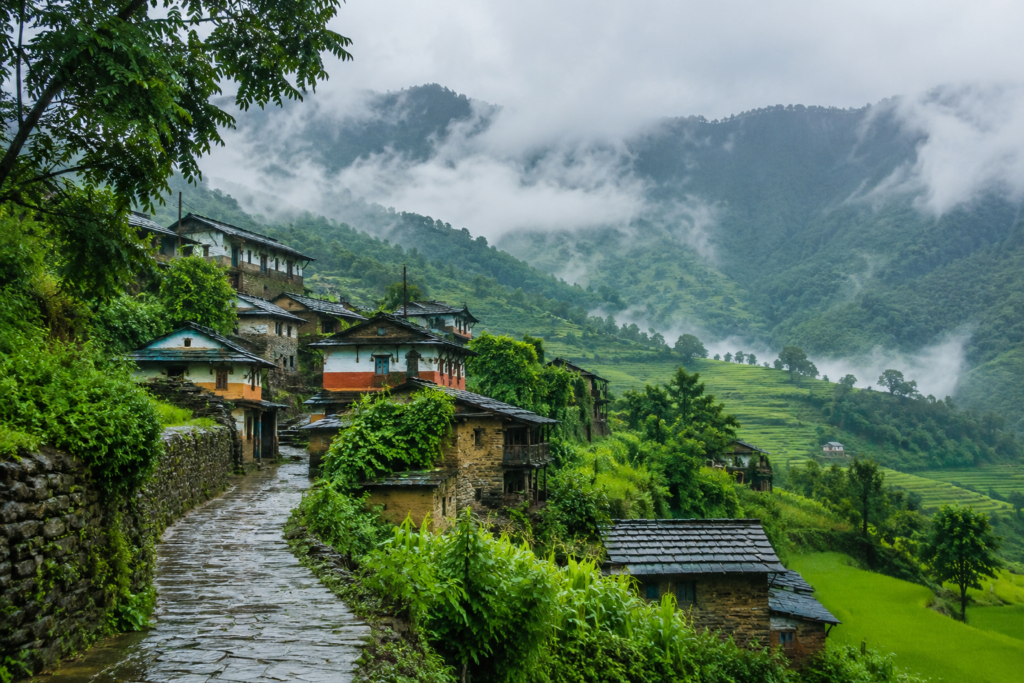
During this season, the country’s hills and valleys transform into vibrant shades of green, rivers flow at their fullest, waterfalls become more spectacular, and the air feels fresh after the rain. Popular tourist destinations such as Kathmandu, Pokhara, Chitwan, Lumbini, Bandipur, and Tansen continue to welcome visitors, although occasional rain showers and road delays should be expected. Rainfall is usually heaviest during the late afternoon or evening, leaving many mornings clear enough for sightseeing and scenic drives.
One of the biggest advantages of visiting Nepal during the monsoon is the quieter travel experience. Compared to the busy spring and autumn seasons, attractions are less crowded, accommodation prices are often lower, and you’ll have more flexibility when booking hotels, guides, and private transportation. Photographers also appreciate the dramatic cloud formations, mist-covered hills, and vibrant landscapes that make Nepal especially beautiful during this time of year.
However, monsoon travel also comes with challenges. Heavy rain can occasionally cause landslides in hilly regions, slippery trekking trails, and temporary road closures, particularly on mountain highways. Flight schedules, especially to remote mountain destinations, may also experience weather-related delays or cancellations. Understanding these potential risks and preparing accordingly can make a significant difference in ensuring a safe and enjoyable trip.
For travelers planning a road journey, hiring an experienced local driver is one of the best ways to travel during the monsoon season. Professional drivers understand Nepal’s road conditions, monitor weather updates, and can adjust routes when necessary to avoid delays or hazardous areas. A private vehicle also offers greater comfort and flexibility than public transportation, allowing you to travel at your own pace and stop whenever the weather permits.
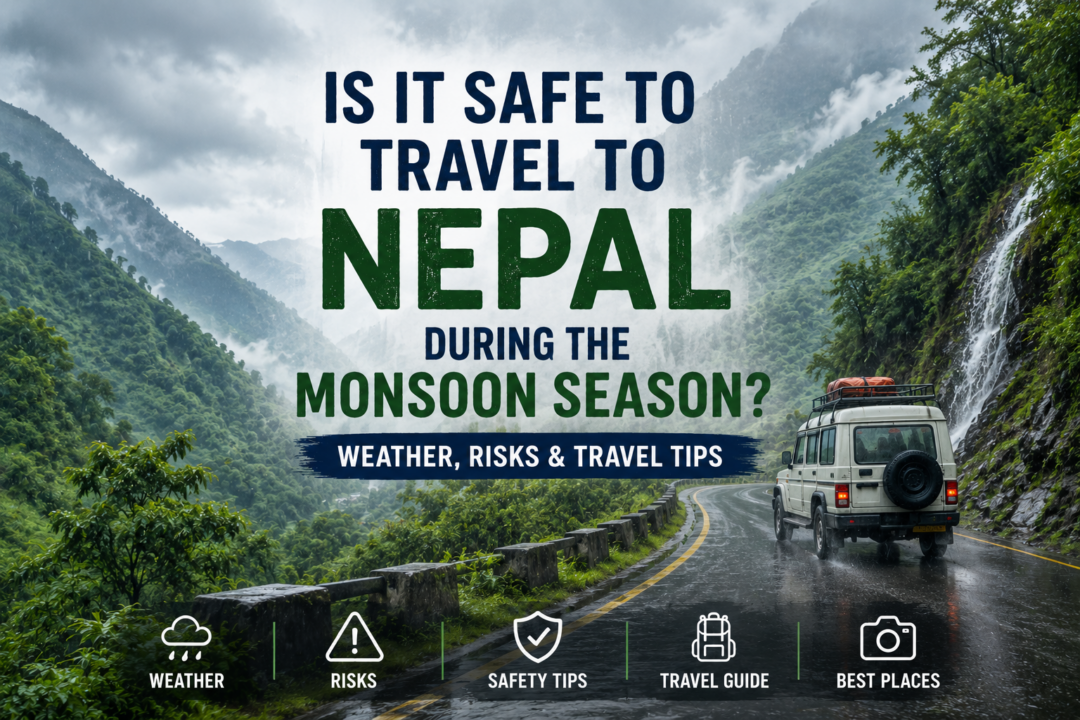
In this guide, we’ll answer one of the most common questions travelers ask: Is it safe to travel to Nepal during the monsoon season? We’ll cover Nepal’s monsoon weather, the advantages and disadvantages of traveling during this period, road conditions, trekking safety, transportation tips, essential packing advice, and the best destinations to visit. Whether you’re planning a cultural tour, wildlife adventure, pilgrimage, or a scenic road trip, this guide will help you make informed decisions and enjoy a safe, memorable journey across Nepal during the rainy season.
When Is the Monsoon Season in Nepal?
Nepal’s monsoon season typically begins in mid-June and lasts until late September, although the exact timing can vary slightly each year depending on regional weather patterns. The season is driven by moisture-laden winds from the Bay of Bengal, bringing most of the country’s annual rainfall.
The heaviest rainfall usually occurs during July and August, when frequent afternoon and evening showers are common across much of Nepal. However, it rarely rains continuously throughout the day. Mornings are often clear or partly sunny, providing excellent opportunities for sightseeing, photography, and road travel before clouds build later in the day.
Rainfall is not evenly distributed across Nepal. The southern plains (Terai), central hills, and popular destinations like Kathmandu and Pokhara receive significant rainfall, while trans-Himalayan regions such as Upper Mustang and Dolpo lie in a rain-shadow area and remain comparatively dry. These regions are among the few trekking destinations that are ideal to visit during the monsoon.
Nepal Monsoon Season at a Glance
| Month | Weather Conditions | Travel Suitability |
|---|---|---|
| June | Monsoon begins, increasing rainfall, warm temperatures | Good for city tours and wildlife safaris early in the month |
| July | Peak monsoon, frequent heavy showers, lush green landscapes | Suitable for cultural tours and rain-shadow destinations |
| August | Continued heavy rainfall, occasional road disruptions | Best for flexible itineraries and private vehicle travel |
| September | Rain gradually decreases, clearer skies return | Excellent time for road trips, sightseeing, and the start of autumn trekking |
Although the monsoon brings occasional travel challenges, it also transforms Nepal into one of its most scenic seasons. The countryside becomes lush and vibrant, waterfalls are at their most impressive, and tourist attractions are far less crowded than during the peak spring and autumn months. Travelers who plan carefully, monitor weather conditions, and allow some flexibility in their itinerary can enjoy a safe and memorable visit during Nepal’s rainy season.
Weather Differences by Region and Temperature During Monsoon
The precipitation distribution across Nepal is highly uneven due to the extreme variations in elevation and the rain shadow effect. The Nepal weather in July and August is generally characterized by high temperatures combined with elevated relative humidity, creating sultry environments in the lowlands, while higher elevations maintain cooler temperatures despite the rain.
| Region | Elevation Range | Average High / Low (July-August) | Climate Characteristics & Precipitation |
| Terai Lowlands (Chitwan, Lumbini) | 100m – 300m | 33°C – 34°C / 25°C – 27°C | Oppressive heat, highly muggy, frequent flooding. Receives roughly 400-450mm of rain per month during the peak. |
| Mid-Hills (Kathmandu Valley) | 1,300m – 1,500m | 28°C – 29°C / 19°C – 23°C | Warm, highly humid, afternoon showers. Receives approximately 350-400mm of rain monthly. |
| Mid-Hills (Pokhara) | 800m – 1,000m | 30°C – 36°C / 26°C | Very hot, torrential downpours. Due to its proximity to the Annapurna massif acting as a catchment, it is the wettest city, receiving upwards of 500mm in July. |
| Trans-Himalaya (Upper Mustang, Dolpo) | 3,000m – 4,500m | 17°C – 25°C / 5°C – 11°C | Mild, dry, high afternoon winds. Protected by the 8,000m peaks, it receives minimal rainfall (often less than 30mm per month). |
| High Himalayas (Everest Base Camp) | 4,500m – 5,500m | 8°C – 15°C / 0°C – 5°C | Cool, misty, persistent cloud cover. Less intense rain than the foothills, but frequent fog and drizzle. |
Understanding the precise nature of Nepal weather is critical for logistical planning. The disparity between a region receiving 500mm of rain and one receiving 30mm dictates the entire framework of safe travel during these months.
Is It Safe to Travel to Nepal During Monsoon?
Evaluating the safety of traveling to Nepal during the monsoon requires parsing the specific modes of transport and the intended activities. The overarching conclusion is that urban tourism and rain-shadow trekking carry minimal risks, whereas high-altitude trekking in the southern foothills and overland travel on unstable highways require significant caution and risk-mitigation strategies.
Overall Safety and Tourist Infrastructure
Nepal’s tourism sector does not shut down during the monsoon. Most major tourist destinations, including the UNESCO World Heritage Sites scattered throughout the Kathmandu Valley (Bhaktapur, Patan, and Kathmandu Durbar Squares), remain fully open and bustling with local and international activity. City sightseeing is generally safe, as urban areas are structurally resilient and less susceptible to the devastating landslides that routinely affect rural mountain roads.
Road Travel Vulnerabilities
Overland transportation presents the highest statistical risk during the rainy season. The country’s topography—featuring young, fragile, and steep mountainsides—combined with heavy rainfall and ongoing, massive infrastructure expansion projects, creates ideal conditions for slope failure. Major arteries, such as the Narayanghat-Mugling highway, the Prithvi Highway, and the BP Highway, frequently suffer from blockages due to mudslides, falling boulders, and washed-out temporary diversions. For instance, the Roshi Khola section of the BP Highway has seen extensive damage necessitating deep reinforced concrete retaining walls extending up to four meters below the riverbed to withstand violent floodwaters. A standard six-hour journey can easily extend to eight or ten hours, or require overnight halts if heavy machinery is needed to clear a massive landslide.
Domestic Aviation
Aviation in Nepal relies heavily on Visual Flight Rules (VFR), meaning pilots must maintain visual contact with the terrain. During the monsoon, dense cloud cover, mist, and sudden convective squalls severely limit visibility. Flights to mountainous STOL (Short Take-Off and Landing) airstrips, notably Lukla (the gateway to Everest) and Jomsom (the gateway to Mustang), are highly susceptible to delays and cancellations. While flying is statistically safer than navigating landslide-prone highways, travelers must accept that mountain flights may face delays and build buffer days into their itineraries to account for these inevitable disruptions.
Trekking Safety
Trekking safety varies drastically by region. On popular southern-facing routes (such as the lower Annapurna and Langtang regions), trails become dangerously slick clay, wooden suspension bridges can be swept away by swollen rivers, and the risk of rockfalls from destabilized slopes is highly elevated. Furthermore, the broadleaf and subtropical forests become heavily infested with leeches, creating a persistent nuisance and a minor infection risk. Conversely, trekking in trans-Himalayan regions is structurally safe and highly recommended due to the arid conditions.
Health Concerns
The monsoon season triggers predictable and significant spikes in communicable diseases. Flooded drains and compromised drinking water pipes increase the incidence of gastrointestinal pathogens leading to cholera, typhoid, and hepatitis A and E. Additionally, stagnant water provides optimal breeding grounds for Aedes aegypti and Aedes albopictus mosquitoes, elevating the risk of vector-borne illnesses such as dengue fever, which has become endemic across the country, and scrub typhus. Strict adherence to water purification and mosquito prophylaxis is absolutely mandatory for safety.
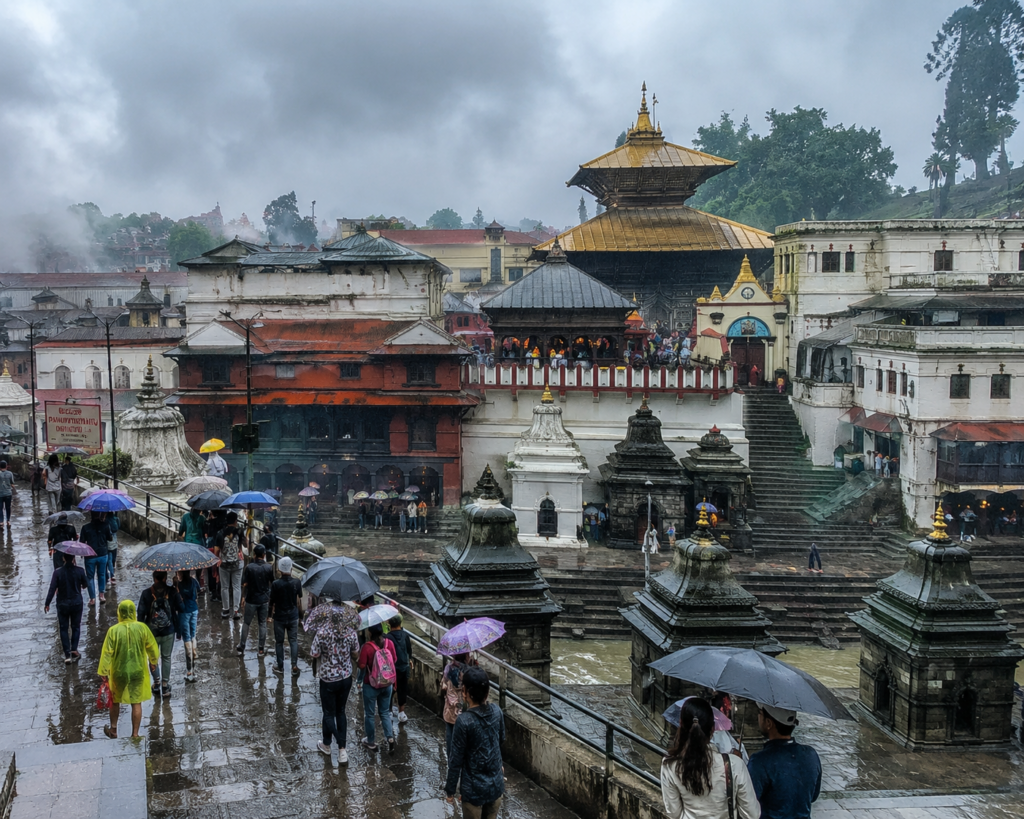
Pros of Visiting Nepal During Monsoon
While the logistical challenges and infrastructural vulnerabilities are frequently highlighted, tourism analysts point out that visiting Nepal during the rainy season offers distinct strategic, economic, and aesthetic advantages that cannot be replicated during the peak spring and autumn windows. Many blogs only discuss the negatives, but the advantages are substantial for the prepared traveler.
- Fewer Tourists: The monsoon represents the definitive off-season for international tourism. Travelers can explore ancient temples, museums, and national parks without the overwhelming crowds typical of October or April. This allows for genuine solitude on the trails and unimpeded views at heritage sites, creating a much more intimate travel experience.
- Lower Hotel Prices: The hospitality sector, facing low occupancy rates, frequently implements dynamic pricing strategies. Premium hotels, boutique lodges, and private transport services offer significant discounts, making luxury travel highly accessible and providing excellent value for budget-conscious explorers.
- Lush Green Landscapes: The monsoon acts as an immense ecological restorative. The arid, dusty hills of the dry season are transformed into vibrant, emerald-green terraced fields. This is the primary rice-planting season, offering travelers a glimpse into authentic agricultural rhythms and rural vitality.
- Beautiful Waterfalls and Hydrological Vigor: Waterfalls, rivers, and lakes swell to their maximum capacities. Scenic locations like Devi’s Fall in Pokhara and the high-volume rapids of the Trishuli and Bhote Koshi rivers become intensely powerful and visually arresting.
- Cleaner Air After Rain: The atmosphere is periodically scrubbed clean of dust, vehicular smog, and industrial pollutants by the heavy rain. This results in crystalline air quality in the mornings, making the environment feel fresh and invigorating.
- Excellent Photography: For landscape and macro photographers, the season is unmatched. The dynamic interplay of heavy clouds, rolling mists over deep valleys, and dramatic lighting provides spectacular photographic conditions. The forest floors come alive with unique fungi, mosses, and exotic insects, ideal for macro photography.
- Peaceful Temples and Heritage Sites: When the rain hits the ancient bricks of Bhaktapur, Patan, and Kathmandu Durbar Square, the cities take on a nostalgic, timeless quality. The absence of large tour groups allows for deep cultural immersion and quiet reflection in these sacred spaces.
Risks of Traveling During the Monsoon in Nepal
While Nepal remains a wonderful destination during the monsoon season, travelers should be aware of a few weather-related challenges. Most risks can be managed with proper planning, flexible schedules, and reliable transportation.
1. Landslides and Road Closures
Heavy rainfall can trigger landslides in Nepal’s hilly and mountainous regions, particularly along highways connecting Kathmandu, Pokhara, Chitwan, Bandipur, and western Nepal. These landslides may temporarily block roads, resulting in travel delays or detours. Conditions are usually restored quickly, but it’s wise to allow extra travel time during the rainy season.
2. Flight Delays and Cancellations
Domestic flights are more likely to experience delays or cancellations during the monsoon due to poor visibility, low clouds, or heavy rain. Flights to mountain destinations such as Lukla, Jomsom, and other remote airports are especially weather-dependent. If your itinerary includes flights, keeping a flexible schedule is highly recommended.
3. Slippery Roads and Challenging Driving Conditions
Rain makes many roads wet and slippery, particularly in rural and mountainous areas. Potholes, muddy sections, and reduced visibility can slow travel. Hiring an experienced local driver who understands Nepal’s road conditions is one of the safest ways to travel during the monsoon.
4. Flooding in Lowland Areas
Some areas of the Terai region may experience localized flooding after prolonged or heavy rainfall. Although major tourist destinations generally remain accessible, temporary road diversions or delays can occur. Checking local weather forecasts before traveling is always advisable.
5. Limited Mountain Views
One of the biggest disappointments for many visitors is that clouds and mist often obscure the Himalayan peaks during the monsoon. If panoramic mountain views are your main priority, the autumn season (October–November) offers more consistently clear skies.
6. Leeches and Insects
Trekkers exploring forests or lower-elevation trails may encounter leeches, especially after rain. Mosquitoes and other insects are also more common in warm, humid areas, including national parks and the Terai. Carrying insect repellent, wearing long sleeves, and using proper trekking footwear can help minimize discomfort.
7. Trekking Trail Conditions
Many trekking routes become muddy, slippery, and more challenging during the rainy season. River crossings may become difficult, and there is a higher risk of landslides in certain areas. If you’re planning a trek, choose suitable routes, monitor weather updates, and consider hiring an experienced guide.
8. Flexible Itineraries Are Essential
Weather conditions can change quickly during the monsoon. Unexpected rain, traffic delays, or temporary road closures may require adjustments to your travel plans. Keeping an extra day or two in your itinerary provides peace of mind and helps avoid unnecessary stress.
Can These Risks Be Managed?
Yes. Thousands of travelers visit Nepal during the monsoon every year without major problems. By monitoring weather forecasts, allowing extra travel time, choosing reliable transportation, and staying flexible with your schedule, you can significantly reduce potential risks.
For road trips across Nepal, traveling with a Transport Hire Nepal offers added safety, local knowledge, and the flexibility to adjust routes if weather conditions change. With sensible planning, the monsoon season can still provide a memorable travel experience filled with lush landscapes, fewer crowds, and unique natural beauty.
A pragmatic approach to travel in the region demands a thorough, realistic understanding of the specific environmental hazards and the implementation of targeted mitigation strategies to minimize each risk.
Best Places to Visit During Monsoon in Nepal
Selecting appropriate destinations is the paramount factor in curating a successful monsoon itinerary. This section outlines destinations that attract strong search traffic and represent the optimal balance of accessibility, safety, and aesthetic reward.
| Destination | Altitude | Monsoon Characteristics | Why it is Suitable |
| Kathmandu Valley | 1,400m | Warm, humid, afternoon showers | The capital and satellite cities (Patan, Bhaktapur) are highly resilient to rain. Excellent for museum hopping, exploring heritage sites, and experiencing cultural festivals like Janai Purnima. Paved areas mitigate mud. |
| Pokhara | 822m | Heavy rainfall, lush greenery | Despite high rainfall, the swollen Phewa Lake and powerful waterfalls (Devi’s Fall) are spectacular. Ideal for spa retreats, short hikes to the Peace Pagoda, and experiencing the dramatic cloud dynamics. |
| Bandipur | 1,030m | Misty, moderate rainfall | A beautifully preserved Newari hilltop town that frequently floats above a sea of clouds. Offers a peaceful, fog-shrouded retreat with stunning views of the Marsyangdi River valley. |
| Lumbini | 150m | Hot, humid, heavy rain | The birthplace of Buddha offers expansive, peaceful monastic zones that remain accessible. The surrounding wetlands become vibrant, offering a tranquil, spiritual experience away from crowds. |
| Chitwan National Park | 415m | Very hot, humid, flooding risk | Suitable during the early monsoon (June). The jungles are incredibly dense, providing excellent opportunities for birdwatching and safaris before the peak rains flood the inner park roads. |
| Ilam | 1,208m | Cool breezes, misty rain | Nepal’s primary tea-producing region transforms into a rolling paradise. The mist rolling over the tea gardens at Kanyam provides phenomenal conditions for photography and relaxation. |
| Mustang (Upper) | 3,840m | Dry, windy, sunny | A premier rain shadow area protected by the Annapurna massif. The high-altitude desert features eroded red cliffs, ancient caves, and the walled city of Lo Manthang. Trails are dry, skies are clear, and it is completely leech-free. |
| Upper Dolpo | 4,080m+ | Dry, remote, isolated | Another exceptional rain shadow area offering a Tibetan-Buddhist wilderness. Features high passes and the striking Phoksundo Lake. It offers true solitude and remains snow-free and dry during the summer. |
Places to Avoid During Heavy Rain
To ensure safety, certain geographical regions must be strictly avoided during periods of high precipitation due to extreme geomorphological instability and biological hazards. Because weather conditions change rapidly, travelers should constantly check local updates before attempting any of these routes.
- Langtang Trek: The steep, narrow V-shaped valleys of the Langtang region are notoriously prone to landslides and rockfalls. Heavy rains destabilize the steep valley walls, creating severe hazards for trekkers navigating the narrow corridors.
- Annapurna Circuit (Some Sections): While the northern sections (Manang to Muktinath) sit in the rain shadow, the lower southern approaches (such as Besisahar to Chame) endure torrential rain. These lower sections suffer from slick trails, rampant leech infestations, and frequent trail washouts.
- Manaslu Circuit: Similar to Annapurna, the lower Buri Gandaki gorge on the Manaslu trek is highly susceptible to heavy rain, resulting in dangerous mud, rockfalls, and slippery, challenging ascents that compromise safety.
- Remote Mountain Roads: Unpaved, tertiary roads traversing steep hillsides, such as the Karnali Corridor or the upper reaches of the Mechi Highway, should be avoided. These roads often lack structural retaining walls and can remain impassable for weeks, cutting off access to medical facilities.
- Areas Prone to Landslides: Known hotspot corridors, such as the Tuin Khola area on the Narayanghat-Mugling road or the Bhotekoshi valley on the Araniko Highway, require extreme caution and should be bypassed entirely during active, heavy rainfall.
Avoid Night Travel During Monsoon Season
Night travel on Nepal’s highways during the monsoon season is universally discouraged by risk analysts and heavily restricted by local authorities.
The primary danger stems from a severe reduction in visibility. During nighttime, drivers are unable to detect early warning signs of slope failure—such as small rockfalls, trickling mud, or cracks in the asphalt—until it is too late to execute evasive maneuvers. Furthermore, if a vehicle becomes stranded due to a landslide or flood, rescue operations, heavy machinery deployment, and medical evacuations are routinely halted until daybreak. The psychological stress of navigating treacherous, unlit hill roads in heavy downpours further increases the probability of human error. Weather conditions change rapidly in the mountains; therefore, all intercity movement should be strictly confined to daylight hours, and travelers must continuously check local updates before departing.
Essential Monsoon Travel Packing List
The success of a monsoon expedition is heavily dependent on appropriate material preparedness. The deployment of advanced, moisture-managing textiles and specialized protective gear is mandatory. Note that cotton must be entirely eliminated from the packing list; it absorbs atmospheric moisture, dries incredibly slowly, and vastly increases the weight of garments while promoting chafing and hypothermia. This section is highly useful for readers planning their logistical loadout.
| Gear Category | Essential Items | Technical Rationale |
| Outerwear | Waterproof jacket (Gore-Tex or equivalent); Umbrella; Trekking poncho. | A hard-shell jacket is standard, but a poncho provides superior ventilation in humid conditions. An umbrella is highly effective for cultural tours or valley walks where a raincoat would cause overheating. |
| Footwear | Waterproof hiking boots (Vibram soles); Extra socks (synthetic/merino). | Traction is critical on slick clay. Boots must be broken in and waterproof. Extra socks are vital to prevent trench foot and blisters caused by persistent dampness. |
| Clothing | Quick-dry clothing (synthetic base layers, convertible pants). | Synthetics wick sweat away from the skin and dry rapidly if exposed to sudden showers. Avoid all heavy cotton hoodies or t-shirts. |
| Protection | Rain cover for backpack; Waterproof phone pouch; Internal dry bags. | A double-layer waterproofing system (external cover + internal dry bags) guarantees the safety of electronics, passports, and a dry set of sleeping clothes. |
| Health/Pest | Insect repellent (DEET/Picaridin); Leech socks; Salt/Tobacco pouch. | High-concentration repellent mitigates mosquito-borne diseases. Leech socks act as a physical barrier against blood-feeding parasites, while salt induces immediate detachment. |
| Electronics & First Aid | Power bank (10,000mAh+); Basic medicines (water purification tablets, rehydration salts, anti-fungal powder). | Ensures communication devices remain charged during remote power outages. Basic medicines manage gastrointestinal issues and foot hygiene. |
Transportation Tips During Monsoon
Navigating Nepal’s infrastructure during the rainy season requires strategic planning. The reliance on public transportation—which adheres to rigid schedules regardless of road conditions and often involves overcrowded, uncomfortable cabins—is strongly discouraged due to the inherent unpredictability of the highways.
- Choosing Private Vehicles like Transport Hire Nepal: For overland journeys, utilizing a reputable private transport service is the most effective risk-mitigation strategy. Agencies like Transport Hire Nepal provide well-maintained fleets of SUVs, cars, and Hiace vans equipped with reliable air conditioning and robust suspension systems. A private vehicle allows for dynamic routing, meaning the driver can alter the path based on real-time traffic and landslide updates.
- Hiring Experienced Local Drivers: Navigating the complex topography, such as the ongoing expansion works on the Mugling-Pokhara corridor or the vulnerable Roshi Khola diversions, requires specific situational awareness. Experienced local drivers employed by professional services know how to read the terrain, identify imminent landslide risks, and safely negotiate deep mud and river crossings.
- Allowing Extra Travel Time: The distance remains the same, but the duration changes drastically. A journey from Kathmandu to Pokhara that typically takes six hours may require eight to ten hours due to reduced speeds, heavy traffic, and road-clearing operations. Travelers must exercise patience.
- Booking Morning Flights: Convective weather systems and thermal buildups peak in the mid-afternoon. Booking the earliest possible morning flight maximizes the probability of departing before the cloud ceiling lowers and visual flight rules are compromised.
- Checking Weather Forecasts: Before departing on any intercity journey, it is imperative to check local meteorological updates and road division reports to ensure the intended highway has not been severed overnight.
- Keeping Flexible Travel Plans: Rigidity is the enemy of monsoon travel. Planners must inject at least one to two “buffer days” into the schedule prior to international departures to ensure that a localized highway blockage does not result in a missed international connection.
Health & Safety Tips
The monsoon drastically alters the epidemiological landscape of Nepal. The influx of water overwhelms municipal drainage systems, contaminates groundwater, and vastly expands the breeding habitats for mosquitoes, necessitating strict prophylactic measures.
- Drink Purified Water: The consumption of untreated tap or spring water is highly hazardous. Public water supplies frequently show high levels of E. coli and fecal coliform during the monsoon, leading to outbreaks of cholera, typhoid, and dysentery. Travelers must exclusively consume boiled water, sealed bottled water, or water treated with chemical purifiers (chlorine/iodine).
- Wear Waterproof Footwear: Keeping feet dry is essential to prevent fungal infections and blisters. Waterproof boots, coupled with anti-fungal powders and camp sandals for evening recovery, maintain foot health.
- Prevent Mosquito Bites: Dengue fever and scrub typhus are endemic and peak during the rains. The Aedes mosquitoes responsible for dengue are diurnal (day-biting). Continuous application of insect repellent on exposed skin and wearing long-sleeved clothing is mandatory.
- Stay Hydrated: The high humidity leads to excessive, often unnoticed sweating. Maintaining hydration with safe water and oral rehydration salts prevents heat exhaustion and electrolyte imbalances.
- Carry Travel Insurance: Comprehensive travel insurance that covers emergency helicopter evacuation is absolute paramount. Muddy roads may prevent ambulance access, leaving rotary-wing evacuation as the sole viable extraction method during a medical crisis.
- Follow Local Weather Advisories: Continuous monitoring of national weather updates and road division alerts prevents travelers from entering active disaster zones.
- Avoid Walking Near Swollen Rivers: Flash floods can occur rapidly without warning, particularly in areas like the Roshi Khola or steep mid-hill valleys. Keep a safe distance from riverbanks, which are prone to sudden erosion and collapse.
- Keep Emergency Contact Numbers: Save essential numbers offline.
Frequently Asked Questions (FAQ)
Q: Does it rain constantly all day during the Nepal monsoon season? No, the precipitation pattern is rarely characterized by continuous, multi-day downpours. The typical monsoon day begins with clear, highly humid mornings, followed by cloud buildup in the early afternoon, culminating in intense, localized thunderstorms in the late afternoon or evening. This pattern allows for substantial morning sightseeing and travel.
Q: Are leeches on the trekking trails dangerous? While psychologically unpleasant, leeches in Nepal do not transmit diseases. They secrete a localized anesthetic so their bite is painless, followed by an anticoagulant (hirudin) that causes the wound to bleed for a prolonged period. The primary risk is a secondary bacterial infection if the bite is scratched. Proper attire (leech socks) and repellents render them a manageable nuisance.
Q: Can travelers view the Himalayan peaks during the monsoon? In the southern mid-hills (Kathmandu, Pokhara), the peaks are frequently obscured by dense cloud cover. However, sudden atmospheric clearings do occur, offering brief, spectacular panoramas of clouds rolling over the mountains. To guarantee unimpeded mountain views, travelers must visit the trans-Himalayan rain shadow regions like Mustang or Dolpo, where skies remain largely clear.
Q: Are internal mountain flights safe during the rainy season? Domestic airlines operate under strict safety parameters regarding visual flight rules (VFR). If visibility drops below required minimums, flights are grounded. Therefore, the risk is less about aviation accidents and almost entirely about severe scheduling disruptions. Statistically, waiting for a clear flight is safer than traversing a landslide-prone highway.
Q: How do I manage the risk of dengue fever? Dengue has become endemic across Nepal, including in previously cooler hill districts. Because the mosquito vectors bite during the day and breed in clean, stagnant water, prevention focuses on applying DEET or Picaridin repellents throughout the daytime, wearing light-colored, long-sleeved clothing, and ensuring accommodation has window screens or mosquito nets.
Recap
The comprehensive analysis of infrastructural, meteorological, and epidemiological data indicates that traveling to Nepal during the monsoon season is not only safe but can be highly rewarding, provided it is approached with calculated logistical planning. The prevailing narrative that Nepal entirely “shuts down” during the rains is demonstrably false; rather, the optimal zones for tourism simply shift to accommodate the weather patterns.
Travelers willing to exchange the crowded, dusty trails of the peak autumn and spring seasons for the lush, vibrant ecosystems of the monsoon will find a unique, deeply atmospheric iteration of the country. By focusing itineraries on the Kathmandu Valley’s resilient heritage sites, the misty cultural hills of Bandipur, or the breathtaking, arid high-altitude deserts of Upper Mustang and Dolpo, visitors can entirely bypass the severe weather disruptions.
The cornerstones of a successful monsoon trip are extreme flexibility, robust material preparedness (specifically regarding advanced waterproof gear, leech protection, and vector prophylaxis), and the utilization of reliable private transportation to mitigate infrastructural hazards. By adhering to these guidelines, avoiding night travel, and continuously monitoring local advisories, the Nepal rainy season ceases to be a liability and transforms into a highly strategic, cost-effective, and visually stunning travel opportunity.