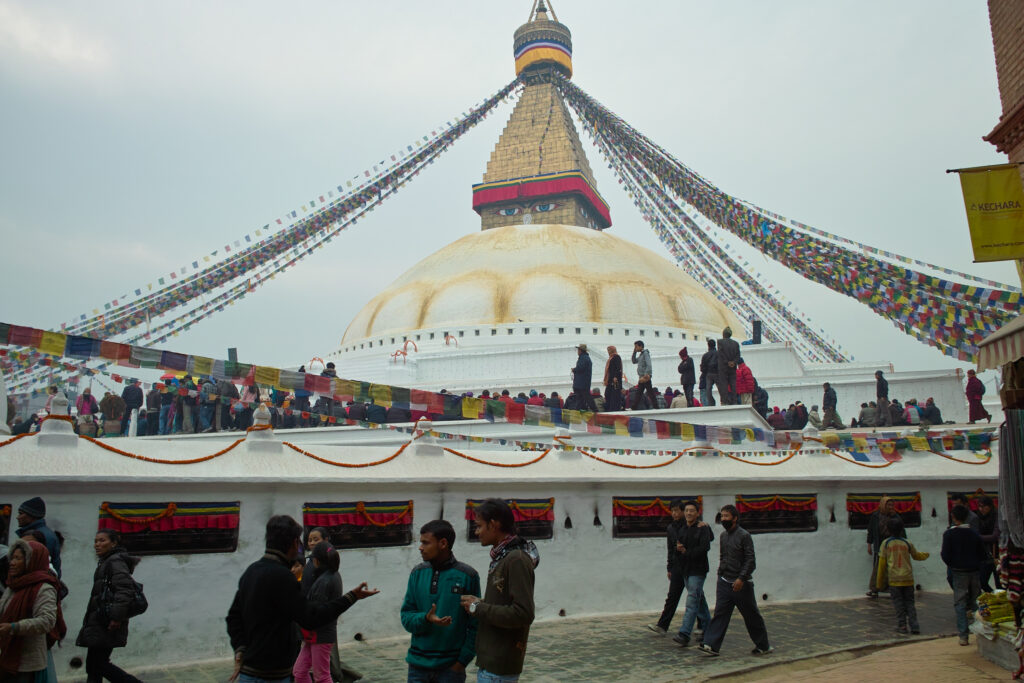
Kathmandu Airport Transfer (KTM) 2026
For travelers from across the globe, landing in Kathmandu is an unforgettable experience. The moment your aircraft descends into the bowl-shaped Kathmandu Valley, you are greeted by a striking blend of urban density, terraced green hillsides, and the distant, majestic silhouettes of the snow-capped Himalayas. However, stepping off your flight at Tribhuvan International Airport (TIA)—Nepal’s primary international gateway—often presents an immediate and intense challenge.
For first-time visitors and seasoned trekkers alike, the transition from the sterile environment of an airplane cabin to the vibrant, chaotic, and high-energy landside arrival area of TIA can be overwhelming. Navigating bureaucratic visa queues, negotiating fluctuating exchange rates, selecting reliable local communication networks, and handling the persistent solicitations of unverified airport taxi drivers requires strategic preparation.
This is where your journey can be transformed. Transport Hire Nepal, established in 2015 as a premier luxury and tourist transport provider based in Thamel, offers a seamless, reliable, and stress-free solution. Our mission is to bridge the gap between your arrival and your destination with uncompromised comfort, fixed and transparent pricing, and professional hospitality.
This master guide is designed to serve as your definitive resource for navigating TIA. From step-by-step terminal arrival protocols to an exhaustive comparative analysis of local transit modes, regulatory updates on the gig economy, and detailed geographic route profiles across Nepal, this blueprint ensures you step out of the airport with absolute confidence.
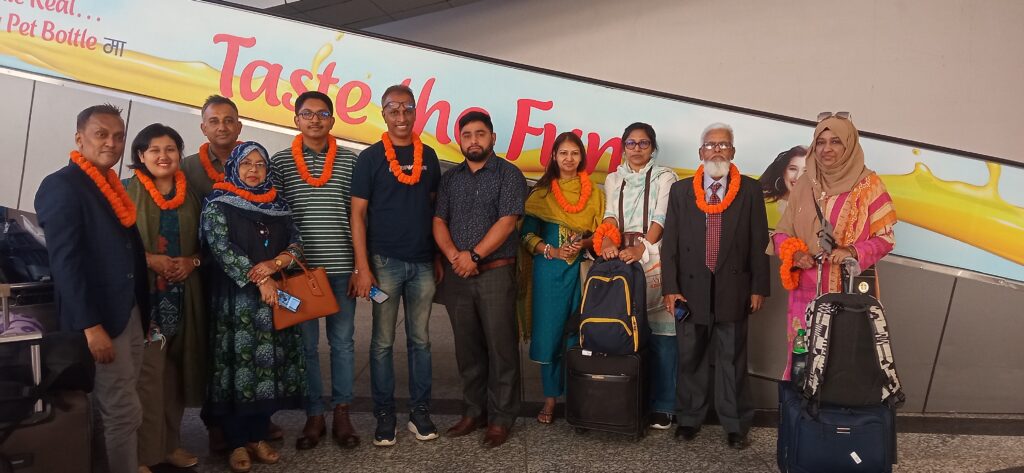
The Anatomy of (TIA): Kathmandu Airport Transfer
To navigate your airport transfer seamlessly, it is essential to understand the physical and operational structure of Tribhuvan International Airport (VNKT / TIA). Situated approximately six kilometers east of the central tourist district of Thamel, TIA serves as a dual-purpose facility handling both international and domestic flights.
Terminal Layout and Operational Divisions
The airport is divided into two primary terminals:
- The International Terminal: A brick-faced building designed to process all arriving and departing flights from global hubs across the Middle East, Asia, and Europe.
- The Domestic Terminal: A separate building located a short distance away, serving as the hub for internal flights to Lukla, Pokhara, Bharatpur, Nepalgunj, and other regional airstrips.
The international arrival process is structurally linear but prone to bottlenecks. Arriving passengers disembark either via passenger boarding stairs or bus transfers, entering the upper level of the arrivals terminal. From there, you are funneled directly into the immigration hall.
Seasonal Traffic Patterns and Congestion Windows
Kathmandu’s traffic and airport utilization are heavily dictated by the seasonal calendar of the Himalayas. The peak tourism and trekking seasons are highly concentrated:
- The Spring Window (March to May): Characterized by warm weather, blooming rhododendrons, and peak climbing expeditions to Mount Everest and surrounding peaks.
- The Autumn Window (September to November): Known for exceptionally clear post-monsoon skies, offering the finest mountain visibility and attracting thousands of trekkers.
During these peak windows, TIA operates at near-maximum capacity. Long delays at immigration, baggage delivery, and customs are common, particularly during the mid-afternoon and late-evening arrival rushes. Understanding these operational realities highlights the value of having a pre-arranged, professional private transfer waiting for you at the gate.
Step-by-Step Arrival, Visa, and Customs Clearance
To minimize transition friction upon landing, travelers should follow a systematic approach to immigration and customs clearances.
Step 1: Visa on Arrival (VOA) & Online Registration
The vast majority of international visitors to Nepal utilize the Visa on Arrival (VOA) facility. While certain nationalities must obtain a physical visa prior to arrival from a Nepalese diplomatic mission, citizens of most countries can secure their tourist visa directly at TIA.
To expedite this process, it is highly recommended to complete the online Arrival Card and Tourist Visa Form on the official portal of the Department of Immigration before departure. Doing so generates a confirmation barcode. You must print this confirmation page and carry it with you. If you do not complete this step in advance, you will be required to use the physical electronic kiosks located in the arrival hall, which often experience long lines and technical glitches.
Step 2: Pay the Visa Fee (The Cash Factor)
Once you have your visa application barcode (from your pre-printed form or the airport kiosk), you must proceed directly to the designated bank counter inside the arrival hall to settle the visa fee.
The standard tourist visa fee structure is strictly categorized by your intended duration of stay :
| Visa Duration | Standard Fee (USD) | Best For | Required Passport Validity |
| 15-Day Tourist Visa | $30 USD | Short treks, cultural tours, business meetings | 6 Months minimum, 1 blank page |
| 30-Day Tourist Visa | $50 USD | Standard Himalayan treks (Annapurna, Langtang) | 6 Months minimum, 1 blank page |
| 90-Day Tourist Visa | $125 USD | Mountaineering expeditions, long-stay travelers | 6 Months minimum, 1 blank page |
Crucial Payment Advice: While the bank counter theoretically accepts credit cards and select major currencies, operational realities strongly favor exact cash in United States Dollars (USD). System outages frequently disable card readers, and paying with large bills in non-preferred currencies can lead to unfavorable exchange rates or delays in receiving change. Secure the exact USD cash prior to boarding your flight.
Exceptions:
- Indian nationals do not require a visa to enter Nepal but must present a valid passport or government-issued voter ID card.
- SAARC citizens (from Afghanistan, Bangladesh, Bhutan, Maldives, Pakistan, and Sri Lanka) are eligible for a free “Gratis Visa” for a maximum of 30 days within a single fiscal year.
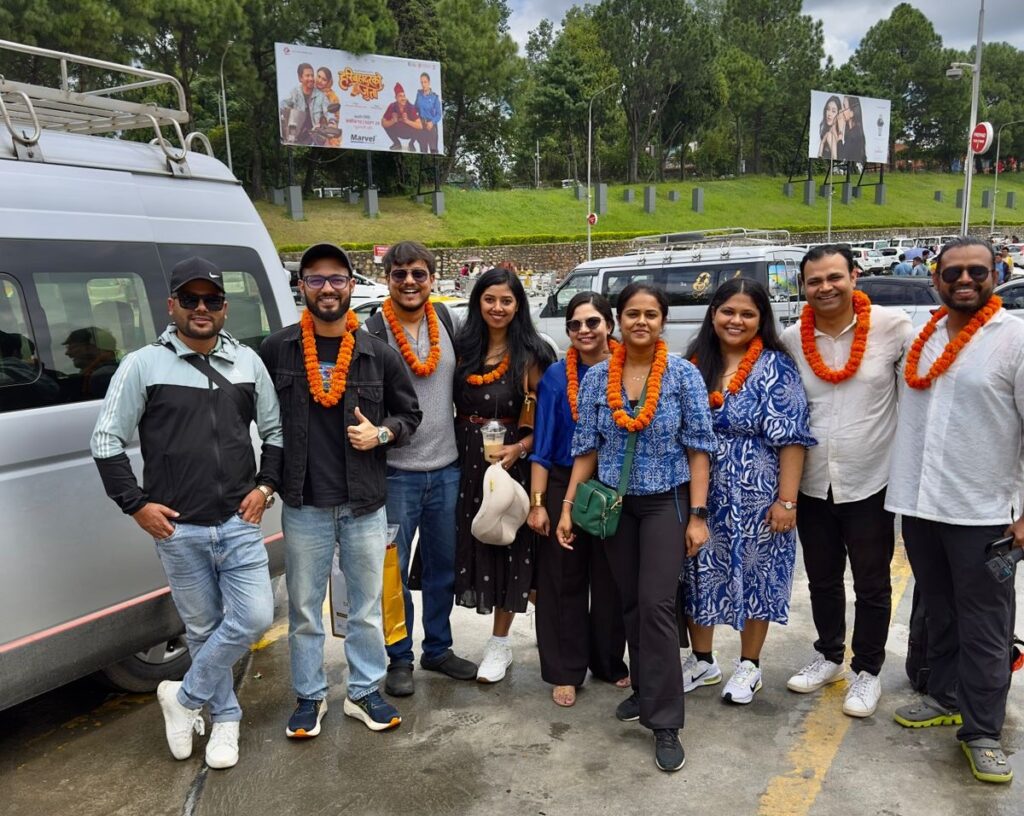
Step 3: Proceed to the Immigration Officer
With your payment receipt, passport, and visa application confirmation in hand, join the queue for your designated counter (e.g., Foreigner Lane, Gratis Visa Lane, or E-Visa Lane). The immigration officer will verify your documents, apply a physical visa sticker to your passport, and stamp your official entry date. Be prepared to show your printed return flight ticket and your initial hotel booking confirmation if requested.
Step 4: Baggage Claim and Missing Luggage Protocols
After securing your passport stamp, descend the stairs to the ground level baggage claim area. Free baggage trolleys are available inside the hall to help you transport your bags.
Because peak-hour congestion can cause delays in luggage delivery, patience is required. Always verify the luggage tag numbers against your boarding pass slips before leaving the claim area.
What to do in case of Delayed or Lost Luggage: If your bags fail to appear on the carousel, do not pass through customs. You must immediately locate your airline’s ground handling desk inside the arrivals hall and file a Property Irregularity Report (PIR). If you have pre-booked a private transfer with Transport Hire Nepal, simply contact us or inform our driver outside, and we will coordinate with your hotel and airline to assist with the recovery and delivery of your delayed bags.
Step 5: Customs Clearance Channels
The final terminal checkpoint is customs. TIA operates a dual-channel customs system:
- The Green Channel: For passengers carrying personal effects and no declarable or restricted goods.
- The Red Channel: For passengers carrying items that exceed duty-free limits, commercial samples, high-value personal jewelry, or currency exceeding regulatory limits.
Financial Regulations & Declarations: In compliance with international anti-money laundering and counter-terrorist financing protocols, Nepal enforces a strict declaration threshold. You must declare if you are carrying physical cash or monetary instruments equivalent to or exceeding $10,000 USD (or its equivalent in other foreign currencies) upon entry. Failure to declare can result in immediate seizure of the funds, heavy fines, and legal prosecution.
Stepping Out: Crucial Financial and Communication Infrastructure
As you clear customs and enter the public arrivals concourse, you cross from the secure terminal into the vibrant urban environment of Kathmandu. To ensure a smooth transfer, you should immediately establish local telecommunications and obtain local currency.
Telecommunications: Securing a Local SIM Card
Having a functional local data connection is highly recommended for real-time navigation, communicating with your transfer driver, and utilizing local services. The landside public arrivals area hosts kiosks for Nepal’s two primary telecommunication providers :
- Ncell: A major private network offering extensive 4G coverage across the Kathmandu Valley and major trekking hubs, with highly user-friendly data package options.
- Nepal Telecom (NTC): The state-owned provider, known for superior coverage in remote mountainous areas and along highway corridors.
To register a local SIM card, you must present :
- A physical copy of your passport.
- One physical passport-sized photograph.
- Your unlocked smartphone.
The activation process is fast. The kiosk agent will assist you in selecting a tourist data package, configuring your Access Point Name (APN) settings, and ensuring your mobile internet is active before you step outside.
Financial Infrastructure: Currency Exchange and Airport ATMs
The official currency is the Nepalese Rupee (NPR). While tourism businesses, upscale hotels, and premier transport services like Transport Hire Nepal accept major international credit cards or USD, cash NPR is required for everyday local transactions, small eateries, and tipping.
The Airport ATM and DCC Trap: While TIA has multiple 24-hour ATMs in the arrivals hall, they frequently impose high transactional service charges and unfavorable conversion rates. Furthermore, these terminals often present travelers with Dynamic Currency Conversion (DCC). DCC gives you the option to charge the withdrawal to your home currency rather than local NPR. Always decline DCC and choose to be charged in local NPR. This ensures your home bank performs the currency conversion, saving you up to 5% to 8% in hidden markups.
Exchange Counter Strategy: For immediate needs—such as buying a SIM card or covering minor travel incidentals—exchange a small sum (e.g., $20 to $30 USD) at the airport counters. Save the bulk of your foreign currency for the competitive, licensed exchange booths in Thamel, Patan, or central Kathmandu, which consistently offer significantly better exchange rates.
| Currency Exchange Operator | Specific Location / Zone | Primary Operating Hours | Key Advantage |
| IME Money Exchange | Arrivals Hall Concourse | 24 Hours | Continuous availability |
| Airport Money Changer | Ring Road Sector | 09:00 AM – 06:00 PM | Out-of-terminal exchange option |
| Dattatraya Money Changer | Airport Gate Area | 07:00 AM – 08:00 PM | Close proximity to the gate |
Keep Your Receipts: Ensure you keep the official physical receipt from every currency exchange transaction. Under Nepalese central bank regulations, you must present these original exchange slips at departure to legally convert any remaining NPR back into foreign currency.
Evolving Legalities and Kathmandu’s Ride-Hailing Landscape
The development of the digital gig economy has introduced a dynamic element to Kathmandu’s urban transport network. Understanding the regulatory landscape, local service standards, and operational limitations of digital ride-hailing is key to navigating the city.
The Vehicles and Transport Management Bill, 2082
Historically, ride-sharing platforms in Nepal operated in a regulatory gray area due to three-decade-old laws that prohibited vehicles with private registration plates (red plates) from carrying commercial, fare-paying passengers.
To address this, the Ministry of Physical Infrastructure and Transport introduced the Bill to Amend and Consolidate Laws Relating to Vehicles and Transport, 2082. This legislation formally recognizes ride-hailing services as “aggregators” or digital intermediaries. This bill establishes a clear legal framework designed to regulate operations and prioritize passenger safety:
- Mandatory Registration: Platforms must register with regional Transport Management Offices, submit PAN/VAT certificates, and maintain verified tax clearance.
- Insurance Protections: Ride-sharing companies must provide comprehensive insurance packages covering the driver, the passenger, and third parties.
- Pillion and Vehicle Restraints: Passenger age ranges are regulated (for example, prohibiting children under 10 or passengers over 80 on two-wheelers), and urban speeds are capped at 40 km/h.
- Driver Shift Limits: Platform logins are capped at a maximum of 12 hours daily to prevent driver fatigue.
The “Offline” Ride Phenomenon and Safety Risks
A notable operational challenge at TIA is the practice of ride-hailing drivers soliciting “offline” rides. To avoid platform commissions or charge higher prices, some drivers accept ride bookings but request that passengers cancel the digital transaction.
Enforcement and Penalties: Accepting an offline ride removes the security of real-time GPS tracking and invalidates platform insurance coverage. Under the new legislation, traffic police can impose immediate fines of up to NPR 2,000 on vehicles carrying passengers offline, helping protect passenger safety and ensure fare transparency.
The Airport Gate Restriction Paradox
For arriving travelers with luggage, the main drawback of ride-hailing apps like Pathao and inDrive is physical access.
Due to security protocols and municipal parking regulations, ride-hailing drivers are often restricted from entering the inner terminal loop to pick up passengers. To meet your driver, you must walk with your luggage out of the terminal, past the parking zones, and out to the main Ring Road or Golden Gate sector. During rainy days or peak heat, navigating this walk with heavy trekking duffels is highly inconvenient.
In contrast, Transport Hire Nepal’s private vehicles have full commercial authorization to enter the inner terminal loop and wait directly at the arrivals curb, ensuring a seamless exit.
Comparative Analysis of Airport Transport Options
When exiting the terminal, passengers have several transport modes to choose from, each representing a different balance of cost, comfort, and security.
1. Pre-Arranged Private Transfer (The Gold Standard)
Pre-arranged private transfers are widely regarded as the most reliable, comfortable, and stress-free option. Booked prior to departure, this service provides a dedicated driver waiting inside the terminal arrivals hall holding a customized placard with your name.
This option features real-time flight tracking, ensuring your driver is present even in the event of flight delays. For families, trekking groups, or late-night arrivals, the security and comfort of a private vehicle make it the ideal choice.
2. Official Airport Prepaid Taxi
Managed through a government-regulated desk inside the arrivals hall, prepaid taxis operate on a fixed-rate system based on zone destination. After payment, you receive a physical paper voucher to present to your assigned driver outside.
While prepaid taxis offer a reliable, haggle-free alternative, the vehicles are often older, non-air-conditioned hatchbacks with limited luggage capacity. Additionally, the standard pricing carries a slight premium over negotiated local alternatives.
3. Negotiated Local Taxi
Non-prepaid local taxis operate just outside the terminal gates. Drivers frequently target unescorted travelers, quoting highly inflated flat rates that bypass the taxi meter.
Utilizing these taxis requires strong negotiation skills and a clear understanding of standard city fares before boarding. While it can yield a cheap transfer for experienced visitors, it carries risks of fare disputes and overcharging.
4. Public and Sajha Yatayat Bus Network
For solo backpackers on an extreme budget, the municipal bus system is an alternative. Large green buses operated by Sajha Yatayat, alongside local microbuses, pass by the airport perimeter.
To use this option, you must walk approximately five to ten minutes outside the main airport gate to the nearest designated stop near Sinamangal or Ring Road. These buses are highly crowded, have limited luggage storage, and do not directly enter tourist zones like Thamel, requiring a transfer or a long walk from Ratna Park.
Comparative Logistics Matrix
| Transport Mode | Est. Cost to Thamel (NPR) | Luggage Capacity | Door-to-Door? | Flight Tracking? | Safety Rating |
| Transport Hire Nepal | NPR 2,000 ($15 USD) | Excellent (Duffels/Jeeps) | Yes | Yes (Automatic) | Excellent |
| Official Prepaid Taxi | NPR 900 ($6.75 USD) | Low (Small Trunk) | Mostly (Zone limits) | No | Good |
| Negotiated Local Taxi | NPR 500 – 700 | Low (Small Trunk) | Yes | No | Moderate |
| Ride-Hailing App | NPR 450 – 550 | Low to Medium | No (Walk required) | No | Good |
| Public Sajha Bus | NPR 20 ($0.15 USD) | Very Low | No (Drops at RNAC) | No | Low |
Transport Hire Nepal: Your Premier Transfer Partner
Since our establishment in 2015, Transport Hire Nepal has grown to become one of the most trusted names in tourist and private transportation in Nepal. Headquartered in Thamel (Gaa-Hiti Marg), we specialize in delivering punctual, safe, and professional transport services tailored to meet the needs of international travelers.
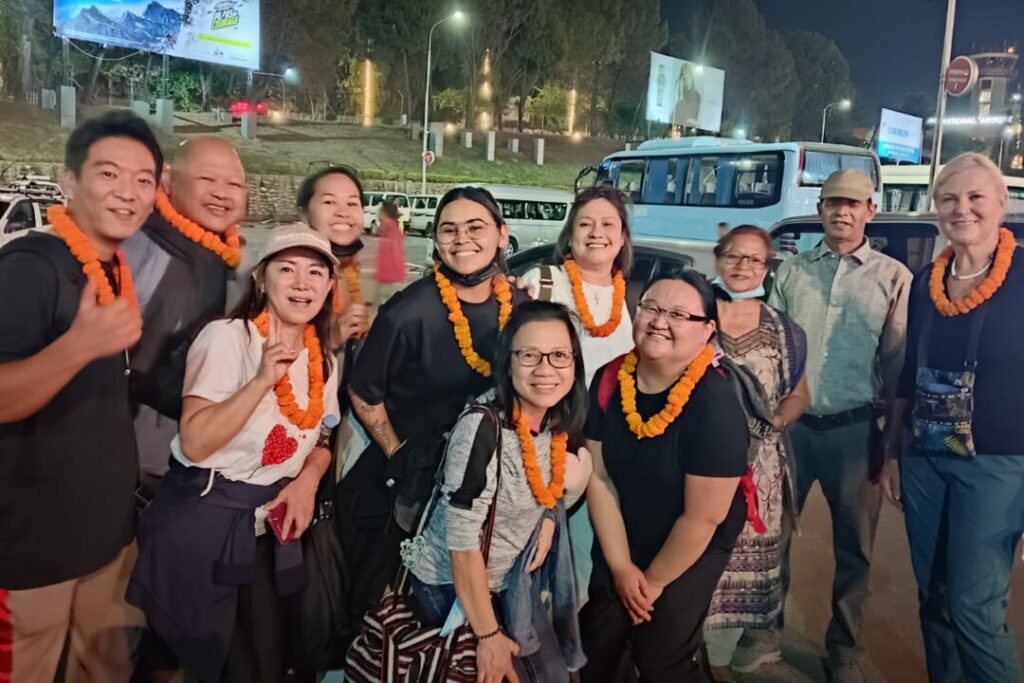
Our Core Commitments: Punctuality, Comfort, and Fixed Pricing
We understand that after a long flight, travelers want a reliable and hassle-free transition. Our airport transfer service is built on three core pillars:
- Absolute Reliability: We track your flight in real-time, adjusting our arrival window automatically for early landings or unexpected delays. Your driver will be waiting at the terminal when you step outside.
- Professional Drivers: Our drivers are fully licensed, safety-trained, and possess extensive local route knowledge. They speak English and serve as a welcoming first point of contact in Nepal.
- Transparent Fixed Pricing: We maintain a strictly fixed, transparent tariff with zero hidden fees, terminal parking surcharges, or night fees. The price quoted during your booking is the final price you pay.
How to Find Your Driver at Kathmandu Airport
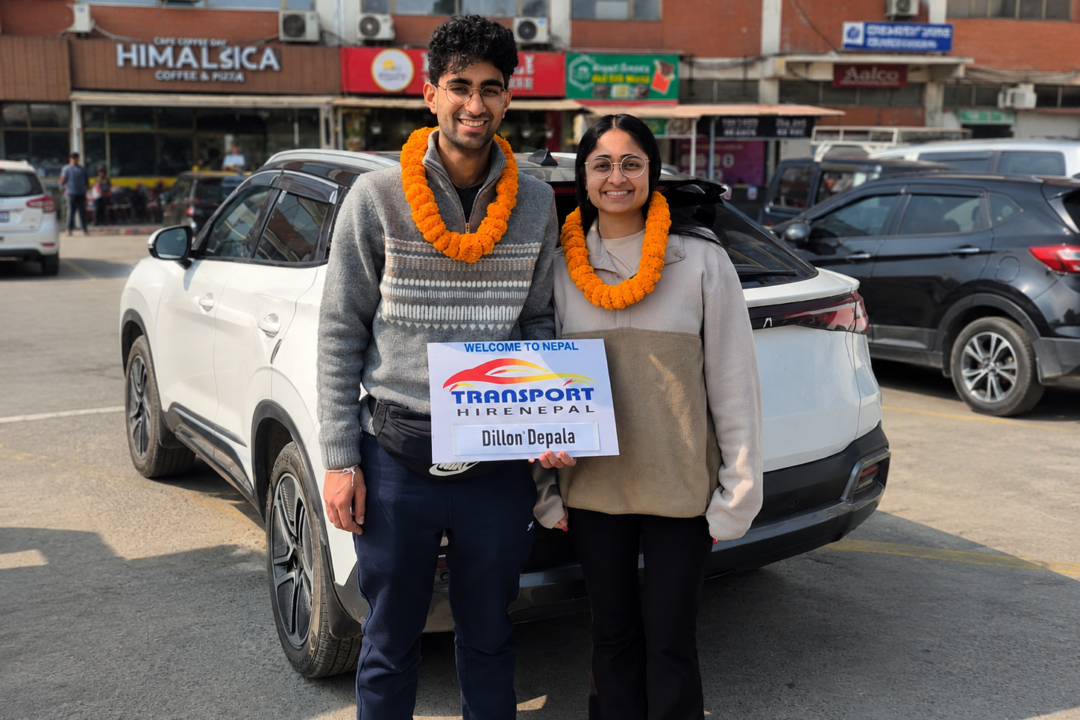
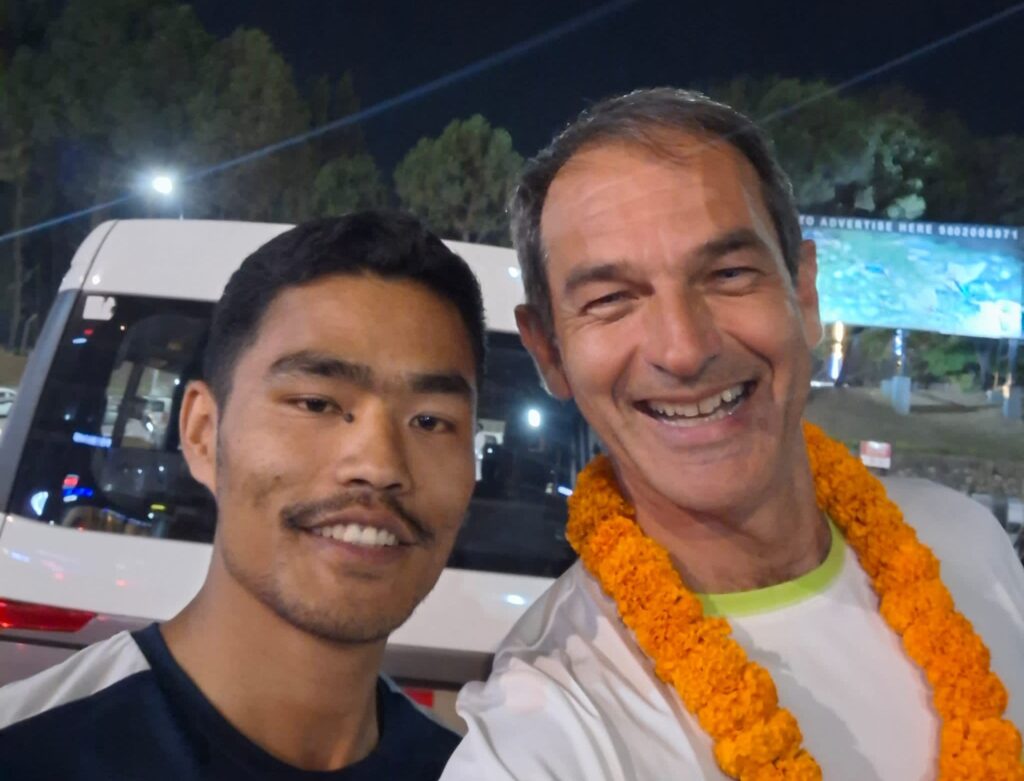
Upon your arrival at Tribhuvan International Airport, Kathmandu, the Transport Hire Nepal team will be waiting for you at the airport arrival area with a clearly displayed name board featuring your name and our company logo. Our professional driver will assist you with your luggage and escort you directly to your assigned vehicle, ensuring a smooth and hassle-free airport pickup experience.
This meet-and-greet service is designed to provide safe, reliable, and stress-free transportation from the airport to your hotel or destination in Kathmandu Valley.
Tech Integration and Proposed Safety Reforms
In alignment with the draft Vehicle Technology, Safety and Passenger-Friendly Guideline 2025, our vehicles are equipped with essential safety features. We maintain first aid kits, carry fire extinguishers, and enforce safety training for our drivers.
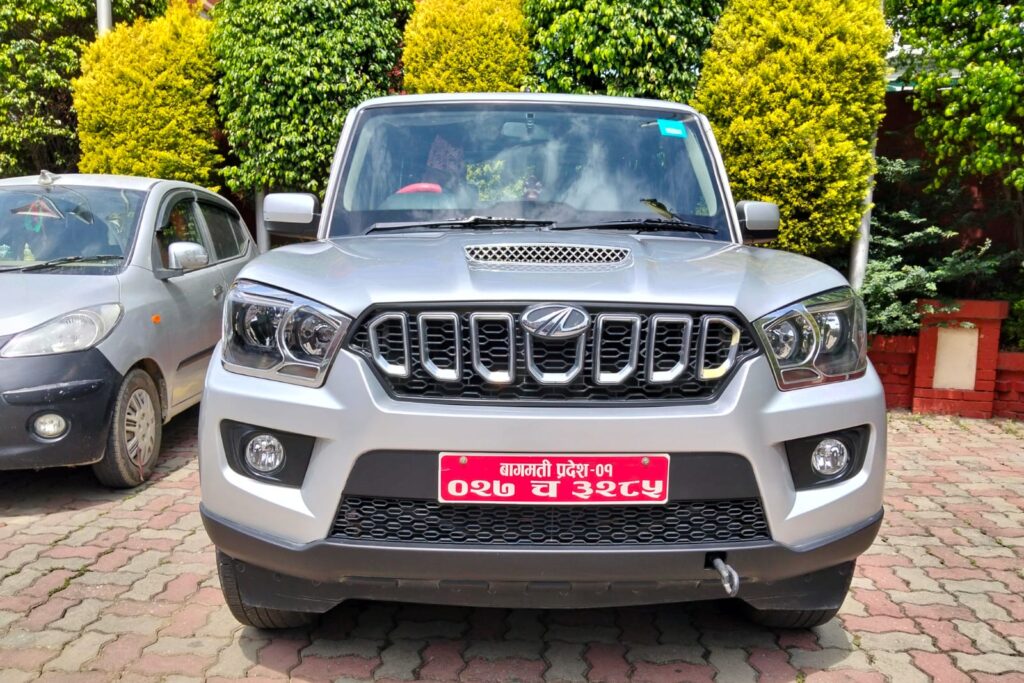
Furthermore, our fleet features Green Plates (Tourist Plates) with white letters. These plates identify registered, commercially-insured tourist transport vehicles, allowing them to bypass city-center commercial vehicle bans and enjoy priority routing across key administrative zones.
Vehicle Fleet and Pricing Matrix
Our diverse fleet is meticulously maintained to accommodate all group sizes and travel requirements.
Fleet Breakdown:
- Private Sedan Car (1 to 3 Passengers): Features comfortable, air-conditioned passenger cars like the Toyota Corolla, Suzuki Dzire, or Hyundai Accent. Perfect for couples or solo travelers.
- Luxury Electric Vehicle (Premium Car Option): Features quiet, eco-friendly electric vehicles like BYD and MG. Perfect for corporate transfers and travelers seeking quiet comfort.
- Scorpio SUV & Jeep (4 to 5 Passengers): Rugged 4WD Mahindra Scorpio S5 SUVs. Ideal for small groups carrying heavy trekking duffels, and perfect for navigations on rough, unpaved secondary roads.
- Toyota Hiace Van (6 to 12 Passengers): Air-conditioned, spacious vans with generous legroom and separate luggage compartments. Ideal for tour groups, climbing teams, and families.
- Mini Bus & Tourist Bus (13 to 30+ Passengers): Features spacious Coaster mini-buses and full-sized tourist buses designed for corporate events, schools, and large tour expeditions.
Transport Hire Nepal Price List (Airport to Destination)
The following matrix represents our fixed-rate transfer pricing from Tribhuvan International Airport to key destinations within and on the periphery of the Kathmandu Valley :
| Destination | Distance (Approx.) | Car (1-3 Pax) | Van/Jeep (4-5 Pax) | Hiace (6-12 Pax) | Bus (13-30 Pax) |
| Thamel | 6 km | USD 15 | USD 20 | USD 25 | USD 35 |
| Patan / Lalitpur | 10 km | USD 18 | USD 25 | USD 30 | USD 40 |
| Boudhanath | 5 km | USD 12 | USD 18 | USD 20 | USD 35 |
| Bhaktapur | 14 km | USD 20 | USD 25 | USD 35 | USD 45 |
| Nagarkot | 27 km | USD 45 | USD 55 | USD 65 | USD 90 |
| Dhulikhel | 30 km | USD 50 | USD 60 | USD 75 | USD 90 |
| Chandragiri | 22 km | USD 35 | USD 50 | USD 65 | USD 80 |
All pricing is fully inclusive of fuel, airport parking surcharges, driver allowances, and applicable government taxes.
Route Profiles: Navigating Kathmandu’s Key Sectors
The urban layout of Kathmandu, defined by historic, narrow streets and high traffic density, means travel times can vary depending on your destination’s location and the time of day.
1. TIA to Thamel (The Tourist Core)
- Approximate Distance: 6 km
- Average Travel Time: 20 to 30 minutes (up to 45 minutes during peak rush hour)
- Route Terrain: Urban asphalt, winding city streets
- Friction Points: The narrow, historic corridors of inner Thamel are often restricted or one-way. Uninitiated drivers may struggle to navigate these corridors, often dropping passengers on the periphery. Our drivers, however, are highly familiar with Thamel’s narrow lanes and will drop you directly at your hotel doorway whenever physically possible.
2. TIA to Patan/Lalitpur (The Cultural Citadel)
- Approximate Distance: 10 km
- Average Travel Time: 25 to 40 minutes
- Route Terrain: Multi-lane Ring Road transition, river bridge crossings
- Friction Points: The primary bottleneck is the Bagmati River crossing. During rush hours (08:00 AM – 11:00 AM and 04:00 PM – 07:00 PM), traffic at bridge access points can cause delays, making pre-planned, comfortable transport essential.
3. TIA to Boudhanath (The Spiritual Hub)
- Approximate Distance: 5 km
- Average Travel Time: 15 to 25 minutes
- Route Terrain: Northbound Ring Road corridor
- Friction Points: Boudha is the closest major destination to TIA, making it the fastest and most straightforward transfer route. Traffic is generally manageable along the main Chabahil and Ring Road sections.
4. TIA to Bhaktapur (The Ancient City)
- Approximate Distance: 14 km
- Average Travel Time: 15 to 25 minutes
- Route Terrain: High-speed, multi-lane Araniko Highway corridor
- Friction Points: Navigating the Araniko Highway is straightforward. However, traffic can slow down near the entrance checkpoints of the old town, where pedestrian-only regulations are enforced.
5. TIA to Nagarkot and Dhulikhel (Himalayan Sunrise Peaks)
- Approximate Distance: Nagarkot (27 km) | Dhulikhel (30 km)
- Average Travel Time: 60 to 90 minutes depending on road conditions
- Route Terrain: Winding, steep mountain roads
- Friction Points: Nagarkot is situated at an altitude of approximately 2,175 meters, requiring a climb up narrow, winding mountain roads. During the summer monsoon, these roads can experience minor mudslides and potholes. For this route, we highly recommend booking our Scorpio SUVs or Hiace vans to ensure optimal suspension and passenger comfort.

Overland Long-Distance Transfers from TIA
For many travelers, Kathmandu is merely the starting point for onward journeys across Nepal. Transport Hire Nepal provides long-distance overland transfers, offering a safer, more flexible, and comfortable alternative to domestic flights or crowded public buses.
1. Kathmandu to Pokhara Overland
- Travel Duration: 6 to 8 hours (highly dependent on current road expansion works along the Prithvi Highway)
- Our Vehicle Pricing: Sedan: USD 150 | Scorpio Jeep: USD 185 | Toyota Hiace: USD 230 | Tourist Bus: USD 400
- Route Highlights: Scenic drive along the Trishuli and Marshyangdi rivers, passing terraced farms, suspension bridges, and local highway villages. You can also coordinate with your driver to stop for a scenic lunch or visit the iconic Manakamana Temple via cable car along the way.
2. Kathmandu to Chitwan (Sauraha) Overland
- Travel Duration: 5 to 7 hours
- Our Vehicle Pricing: Sedan: USD 130 | SUV/Jeep: USD 160 | Toyota Hiace: USD 190
- Route Highlights: This route transitions from the winding Prithvi Highway down into the flat Terai plains, dropping you directly at your jungle safari lodge in Sauraha, Meghauli, or Bharatpur.
3. Kathmandu to Besisahar (Annapurna Circuit Gateway)
- Travel Duration: 6 to 7 hours
- Route Conditions: Follows the Prithvi Highway to Dumre before turning north along the Marshyangdi River valley. While paved, the final stretch towards Besisahar features narrow sections.
- Best Choice: Our 4WD Scorpio SUVs are highly recommended for trekkers carrying heavy climbing gear, providing excellent ground clearance and comfort.
4. Kathmandu to Jiri (The Classic Everest Trail Gateway)
- Travel Duration: 7 to 9 hours
- Our Vehicle Pricing: Sedan: USD 150 | Scorpio Jeep: USD 185 | Toyota Hiace: USD 270
- Route Highlights: A scenic mountain drive passing through Dhulikhel, Khadichaur, Mude, and Charikot. This route features continuous curves and winding bends. During the rainy season, our Scorpio 4WD jeeps are strongly recommended to navigate muddy or unpaved mountain roads safely.
5. Kathmandu to Ramechhap / Manthali (The Lukla Flight Corridor)
- The Flight Diversion Reality: Due to peak-season air traffic congestion and safety regulations, the Civil Aviation Authority of Nepal (CAAN) frequently diverts all flights to Lukla (Everest Region) from Kathmandu to Manthali Airport in Ramechhap. This diversion makes the overland transfer to Ramechhap a vital link in your Everest trekking itinerary.
- Shared Hiace Transfer (USD 25 Per Person): To support trekkers, we operate a daily shared Hiace shuttle service departing early in the morning (around 01:00 AM) from the Thamel area. This departure ensures you arrive at Ramechhap Airport in time for the early morning Lukla flights.
- Private Vehicle Pricing: Sedan: USD 100 | Private Jeep/SUV: USD 140 | Toyota Hiace: USD 190
- Route Insights: The drive takes approximately 4 to 5 hours along the scenic BP Highway corridor. It is characterized by winding, narrow bends where professional mountain driving expertise is essential. Motion sickness medication is recommended for passengers sensitive to curves.
The Ultimate Traveler’s Survival Checklist
To prevent transaction friction, identify opportunistic scams, and ensure a seamless entry into Nepal, review this master checklist before departure.
Identifying and Avoiding Common Airport Scams:
- The “Friendly Helper” Baggage Scam: When exiting the baggage claim or terminal, unauthorized individuals may politely offer to lift or transport your bags on a trolley. Once outside, they will demand steep cash tips. Firmly decline unsolicited assistance and handle your own baggage trolley.
- The “Hotel Closed / Road Blocked” Diversion Scam: Unverified taxi drivers or booking agents may present fake credentials and claim your pre-booked hotel is closed, full, or inaccessible due to localized strikes or road damage. Their goal is to divert you to an unverified, high-commission hotel. Ignore these claims, proceed to your pre-arranged transfer, and call your hotel directly to verify any local updates.
- The Flat-Rate Overcharge: Non-prepaid drivers will frequently quote flat rates that are two to three times higher than the municipal standard. Always negotiate a set price prior to entering any local vehicle.
Spotting Your Transport Hire Nepal Driver:
To locate your designated driver at the arrivals exit:
- After clearing customs and retrieving your luggage, exit through the international arrivals terminal gates.
- Look for the main designated meeting area where representatives are holding signs.
- Your Transport Hire Nepal driver will be waiting patiently at the arrivals gate holding a clearly printed name board with your name.
- Our drivers wear official ID badges and carry direct communication devices.
- You will receive your driver’s direct contact details and vehicle registration information via WhatsApp or email prior to boarding your flight.
FAQ: Kathmandu Airport Transfer (KTM)
1. What is the best way to get from Kathmandu Airport to the city?
The best way is to use a pre-booked private car, taxi, or airport transfer service for safe, fixed-price, and hassle-free travel.
2. How far is Kathmandu Airport (Tribhuvan International Airport) from Thamel?
Kathmandu Airport is about 5–6 km from Thamel, and the drive usually takes 15–30 minutes depending on traffic.
3. How much does a Kathmandu Airport taxi cost in 2026?
Taxi fares from Kathmandu Airport (Tribhuvan International Airport) typically range between USD 15 to USD 30, depending on the vehicle type, time of travel, traffic conditions, and destination within Kathmandu Valley.
For a more comfortable and hassle-free experience, Transport Hire Nepal offers customized private airport transfer services with transparent pricing based on your requirements.
4. Can I book a private airport transfer in advance in Kathmandu?
Yes, many companies offer online pre-booking for private airport pickup and drop services for added convenience and safety.
5. Is Uber or ride-hailing available at Kathmandu Airport?
Uber is not officially available, but local apps like Pathao and inDrive operate in Kathmandu.
6. Are airport taxis in Kathmandu safe for tourists?
Yes, but it is recommended to use licensed taxis or trusted transfer companies to avoid overcharging or scams.
7. What is the difference between taxi and private airport transfer in Kathmandu?
A taxi is metered or negotiated on the spot, while a private transfer offers fixed pricing, comfort, and advance booking.
8. How long does it take to reach Thamel from Kathmandu Airport?
It usually takes 15–30 minutes, but during peak traffic it can take up to 45 minutes.
9. Do airport transfer services in Kathmandu include hotel drop-off?
Yes, most private airport transfer services include direct hotel drop-off and pickup anywhere in Kathmandu Valley.
10. What is the safest airport transfer option in Kathmandu?
The safest option is a pre-booked private car or trusted tour operator transfer service with professional drivers.
Conclusion:
Arriving in a new country should be an exciting start to your adventure, not a logistical headache. By choosing Transport Hire Nepal, you choose peace of mind, professional hospitality, and safe, reliable transport.
Let our experienced team manage your arrival while you relax and look forward to exploring the historic streets of Kathmandu, the tranquil lakes of Pokhara, or the iconic trails of the Himalayas.
Reserve Your Private Transfer Now:
Contact our premier travel team and secure your airport pickup or regional overland journey:
- Office Address: Thamel 26, Kathmandu, Nepal (Gaa-Hiti Marg)
- Phone & Direct WhatsApp: +9779818222342 (Speak directly with our travel expert, Binod, for instant bookings)
- Official Email: info@transporthirenepal.com
- Trip Booking Form: Visit(https://www.transporthirenepal.com/contact-us/)
We look forward to welcoming you to Nepal and ensuring a smooth, comfortable journey from your first step off the plane!